

Scheda oggetti presenti nel museo a vario titolo
Schede catalografiche di base compilate da Alessandro Grossi
Gli oggetti qui schedati sono rappresentazioni fisiche delle figure dell’immaginario o strumenti di attività lavorative della civiltà contadina legati prevalentemente alla tessitura e/o all’intrecciatura. Le statuette prevalentemente in terracotta sono il risultato di attività scolastiche con gli alunni dei Licei Artistici della provincia di Lucca e ripropongono storie e personaggi dell’immaginario folklorico.
The Museum Collections
Objects of material culture and folk imagination preserved by the Museum: search by keyword or browse by section.
166 records found.
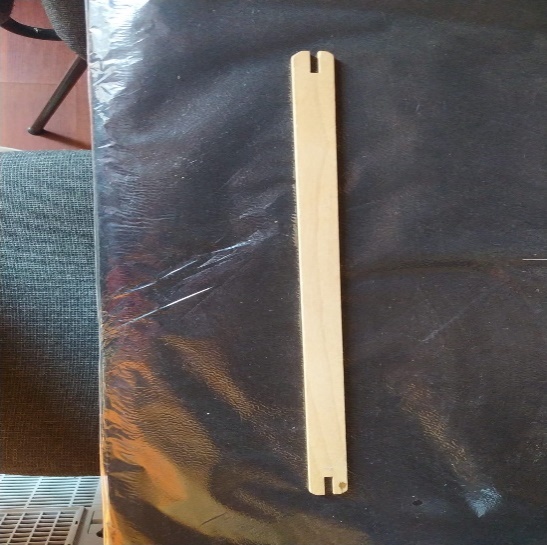
Weaving stick
Light wooden stick, long and slender, with rounded ends and two central slits at each extremity, one also featuring a small hole. Used to separate or tension warp…
Read the full record
- Category
- Domestic weaving tools
- Subcategory
- Weaving stick / warp separator
- Materials
- Wood
- Technique
- Manual weaving on loom
- Dimensions
- Length approx. 30 cm; width approx. 1.5 cm
- Dating
- 20th–21st century
- Location
- Museo Italiano dell’Immaginario Folklorico
- Condition
- Good, with slight signs of use
- Interpretation and context
- Tools of this kind were common in rural Garfagnana households until the mid-20th century, when domestic weaving was a daily practice and a skill passed down from mother to daughter. The stick helped keep the warp threads aligned and eased the passage of the weft on small family looms.
- Compiled by
- Alessandro Grossi
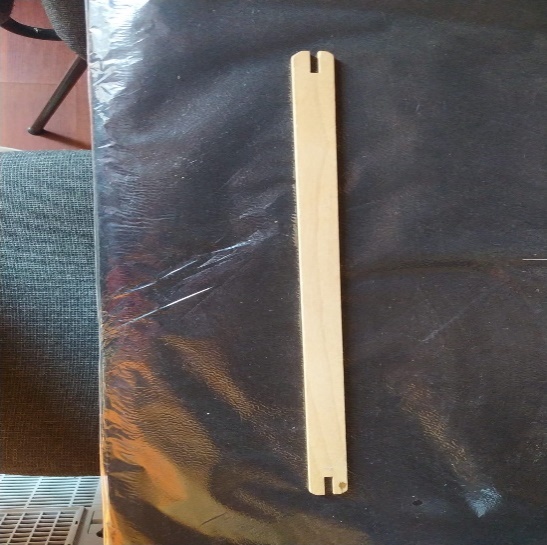
Weaving stick
Light wooden stick, long and slender, with rounded ends and two central slits at each extremity, one also featuring a small hole. Used to separate or tension warp…
Read the full record
- Category
- Domestic weaving tools
- Subcategory
- Weaving stick / warp separator
- Materials
- Wood
- Technique
- Manual weaving on loom
- Dimensions
- Length approx. 30 cm; width approx. 1.5 cm
- Dating
- 20th–21st century
- Location
- Museo Italiano dell’Immaginario Folklorico
- Condition
- Good, with slight signs of use
- Interpretation and context
- Tools of this kind were common in rural Garfagnana households until the mid-20th century, when domestic weaving was a daily practice and a skill passed down from mother to daughter. The stick helped keep the warp threads aligned and eased the passage of the weft on small family looms.
- Compiled by
- Alessandro Grossi
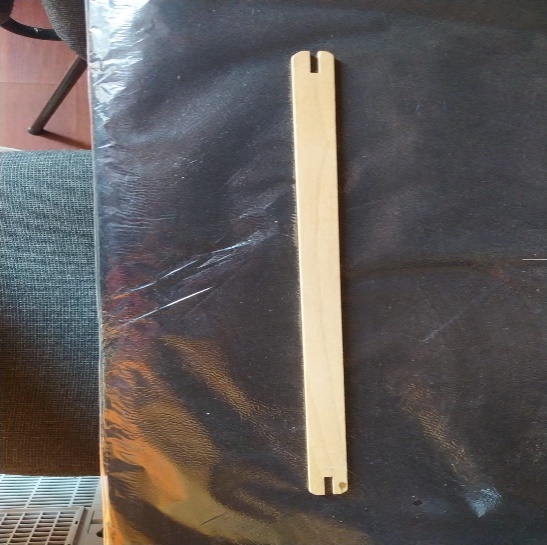
Weaving stick
Light wooden stick, long and slender, with rounded ends and two central slits at each extremity, one also featuring a small hole. Used to separate or tension warp…
Read the full record
- Category
- Domestic weaving tools
- Subcategory
- Weaving stick / warp separator
- Materials
- Wood
- Technique
- Manual weaving on loom
- Dimensions
- Length approx. 30 cm; width approx. 1.5 cm
- Dating
- 20th–21st century
- Location
- Museo Italiano dell’Immaginario Folklorico
- Condition
- Good, with slight signs of use
- Interpretation and context
- Tools of this kind were common in rural Garfagnana households until the mid-20th century, when domestic weaving was a daily practice and a skill passed down from mother to daughter. The stick helped keep the warp threads aligned and eased the passage of the weft on small family looms.
- Compiled by
- Alessandro Grossi
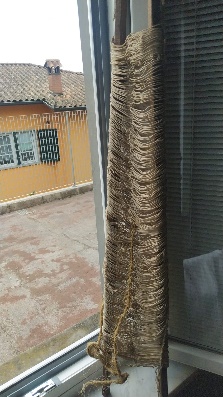
Warp on Rod
Vertical structure composed of two wooden rods with numerous light-colored threads stretched between them. Represents the preparatory warp phase forming the base of the fabric.
Read the full record
- Category
- Domestic work tool
- Subcategory
- Preparatory weaving element
- Provenance
- Garfagnana area, Tuscany
- Materials
- Wood and natural yarn (hemp or linen)
- Technique
- Manual winding of threads on wooden rods
- Dimensions
- Height approx. 80 cm; width approx. 20 cm
- Dating
- 19th–20th century
- Function
- Preparation of the warp for the domestic loom
- Location
- Museo dell’Immaginario Folklorico
- Condition
- Good; partially loosened threads and signs of wear
- Interpretation and context
- In the Garfagnana region, warping was a crucial moment of domestic women’s work. Women arranged the threads precisely, creating the base for weaving linen, hemp, or wool.
Manual warping was practiced until the mid-20th century. Warp rods were often handmade and kept as family tools.
The warp symbolizes order and continuity: each thread is part of a larger weave, as in community life. - Bibliography
- Direct observation; oral testimonies from Garfagnana
- Compiled by
- Alessandro Grossi
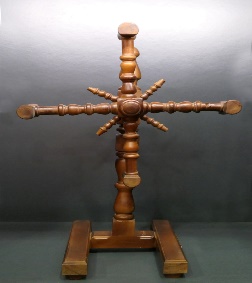
Swift / Skein Winder
Vertical wooden structure with a rectangular base supported by two parallel feet. From the central body extend four horizontal cross-shaped arms with rounded, turned ends. A rotating central…
Read the full record
- Category
- Material culture – Spinning and weaving tools
- Provenance
- Central-northern Italy; Garfagnana or Lucca area
- Materials
- Turned and smoothed wood
- Technique
- Hand-turned and manually assembled; traditional joints and fittings; smooth surface with natural polishing
- Dating
- 19th – early 20th century
- Function
- Tool used to wind and organize threads coming from the spinning wheel or distaff; used to form regular skeins and measure thread length.
- Location
- Esposizione: Displayed vertically, with raking light to highlight turning marks and arm geometry. May be exhibited alongside spinning wheel and distaff to illustrate the spinning cycle.
Museo Italiano dell’Immaginario Folklorico - Condition
- Excellent: intact wood, functioning rotating mechanism, smooth surface.
- Interpretation and context
- Common in rural households and small textile workshops; part of the full spinning cycle along with distaff, spindle, and spinning wheel. A symbol of order and precision, representing the final stage of women’s textile work.
Symbol of measure and completion: it gathers the thread born from labor and prepares it for transformation. An image of order, patience, and harmony. - Bibliography
- - G. Dalla Ragione, Household Trousseaux and Domestic Memory, Rome, 2008. - A. Bellucci, Women’s Work Tools, Florence, 2010. - M. C. Ghidoni, Italian Rural Weaving Traditions, Milan 1995
- Compiled by
- Alessandro Grossi
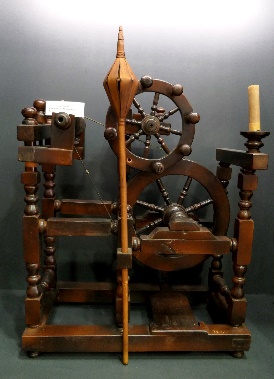
Wooden Spinning Wheel and Distaff
Dark wooden structure with a large spoked wheel connected to a secondary wheel by a transmission cord. At the center is the spindle with distaff, where the thread…
Read the full record
- Category
- Material culture – Spinning and weaving tools
- Provenance
- Central-northern Italy, Garfagnana or Lucca area
- Materials
- Turned and polished wood, transmission cord
- Technique
- Handcrafted assembly with turned elements and joints; manually operated wheels and treadle; reconstruction by Alessandro Terni
- Dating
- 19th – early 20th century
- Function
- Domestic spinning tool used to transform raw fibers (wool, linen, hemp) into thread ready for weaving.
- Location
- Esposizione: Displayed on a horizontal or slightly inclined surface, with warm lighting to enhance the wood’s sheen and mechanical complexity.
Museo Italiano dell’Immaginario Folklorico - Condition
- Excellent: well-preserved wood, intact mechanisms, fully functioning wheels.
- Interpretation and context
- Common in rural households and convents; symbol of women’s work, patience, and the continuity of daily gestures. Spinning was often accompanied by songs and storytelling, becoming a moment of social bonding and oral transmission.
Metaphor of time and memory: the thread winding onto the spindle represents life intertwining, the continuity of knowledge, and the transformation of material into narrative. - Bibliography
- - G. Dalla Ragione, Household Trousseaux and Domestic Memory, Rome, 2008. - A. Bellucci, Women’s Work Tools, Florence, 2010.
- Compiled by
- Alessandro Grossi
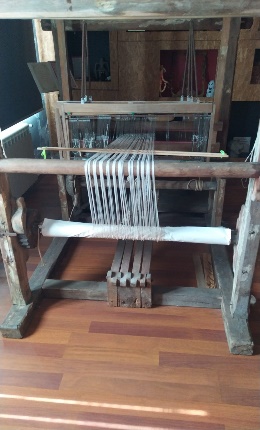
Traditional Wooden Weaving Loom
Traditional wooden loom used for manual weaving. It features a rectangular frame with lower pedals, vertical and horizontal rods, and parallel warp threads. The mechanical components allow lifting…
Read the full record
- Category
- Work tool / Textile equipment
- Materials
- Wood, rope, cotton thread
- Technique
- Handcrafted construction with joints and bindings
- Dimensions
- approx. 150 × 120 × 100 cm
- Dating
- 19th–20th century
- Location
- Museo Italiano dell’Immaginario Folklorico
- Condition
- Good; wear consistent with historical use
- Interpretation and context
- Typical tool of rural craftsmanship, symbol of domestic production and local textile tradition. It represents women’s work and the continuity of manual practices in folk culture.
- Compiled by
- Alessandro Grossi
![Wooden Frame with Horizontal Pegs [Swift or Auxiliary Loom]](https://museoimmaginario.net/immaginario/wp-content/uploads/schede-catalogo/scheda-110-struttura-lignea-con-perni-orizzontali-aspo-o-telaio-ausilia.jpg)
Wooden Frame with Horizontal Pegs [Swift or Auxiliary Loom]
Rectangular wooden frame with eight horizontal pegs arranged on two opposite sides. Used as a support for winding threads or preparing the warp, in conjunction with the main…
Read the full record
- Category
- Work tool / Textile equipment
- Provenance
- Donated by Elena Giusti to the Elena Venturelli Library for the exhibition “Weaving in the Lucchese Area”; later donated to the Italian Museum of Folkloric Imagination.
- Materials
- Chestnut or beech wood
- Technique
- Handcrafted construction with joints and turned pegs
- Dimensions
- approx. 80 × 60 × 10 cm
- Dating
- 19th–20th century
- Location
- Museo Italiano dell’Immaginario Folklorico
- Condition
- Good; wear consistent with historical use
- Interpretation and context
- Complementary tool for domestic weaving, symbol of craftsmanship and precision in rural tradition.
- Compiled by
- Alessandro Grossi
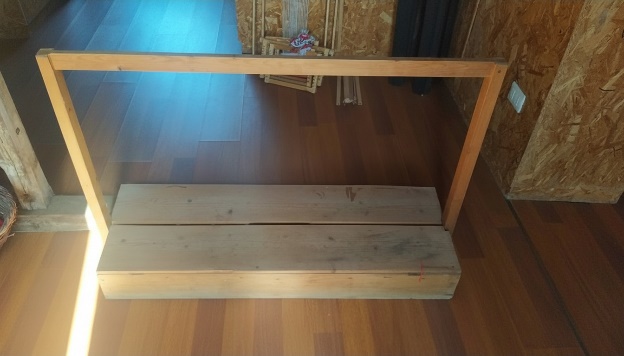
Yarn holder from loom set
Wooden structure consisting of a rectangular base made of two planks and an upper frame with vertical uprights and a horizontal crossbar. Used as a yarn holder within…
Read the full record
- Category
- Domestic weaving tools
- Subcategory
- Yarn holder / loom accessory
- Materials
- Wood
- Technique
- Handcrafted work and assembly
- Dimensions
- Height approx. 80 cm; width approx. 100 cm; depth approx. 25 cm
- Dating
- 20th century
- Location
- Museo Italiano dell’Immaginario Folklorico
- Condition
- Good, with signs of use and slight wood oxidation
- Interpretation and context
- The yarn holder was part of the domestic loom set, common in rural Garfagnana households until the mid-20th century. It was an essential tool for keeping threads organized and facilitating manual weaving, symbolizing the precision and patience of women’s work.
- Compiled by
- Alessandro Grossi
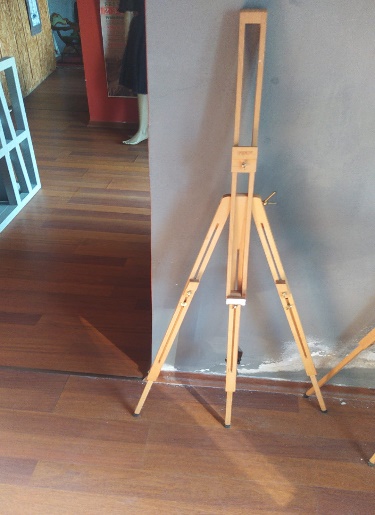
Wooden display easel
Light wooden tripod easel with adjustable structure and central support for panels or canvases. It features metal joints and screws allowing height and angle adjustment. Used to hold…
Read the full record
- Category
- Display and support tools
- Subcategory
- Display easel / painter’s easel
- Materials
- Wood, metal
- Technique
- Assembly and handcrafted work
- Dimensions
- Height approx. 150 cm; base width approx. 60 cm
- Dating
- 20th–21st century
- Location
- Museo Italiano dell’Immaginario Folklorico
- Condition
- Good, with slight signs of use
- Interpretation and context
- Easels of this kind were also used in Garfagnana to display crafts, drawings, and textiles in educational or museum settings. They symbolize continuity between manual tradition and public presentation of local knowledge.
- Compiled by
- Alessandro Grossi
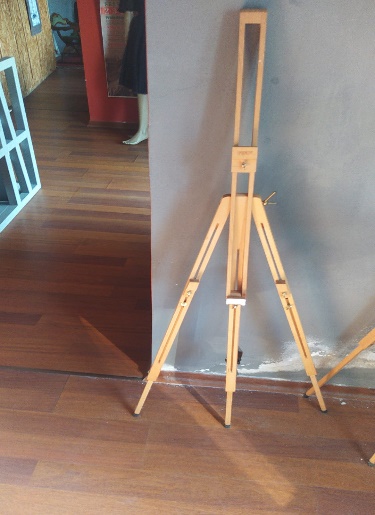
Wooden display easel
Light wooden tripod easel with adjustable structure and central support for panels or canvases. It features metal joints and screws allowing height and angle adjustment. Used to hold…
Read the full record
- Category
- Display and support tools
- Subcategory
- Display easel / painter’s easel
- Materials
- Wood, metal
- Technique
- Assembly and handcrafted work
- Dimensions
- Height approx. 150 cm; base width approx. 60 cm
- Dating
- 20th–21st century
- Location
- Museo Italiano dell’Immaginario Folklorico
- Condition
- Good, with slight signs of use
- Interpretation and context
- Easels of this kind were also used in Garfagnana to display crafts, drawings, and textiles in educational or museum settings. They symbolize continuity between manual tradition and public presentation of local knowledge.
- Compiled by
- Alessandro Grossi
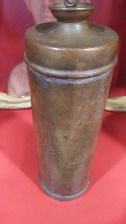
Brass heating container
Everyday Life and Body CareCylindrical brass container with lid and upper ring, used as a precursor to the hot-water bottle. Filled with hot water or embers, it was placed in the bed…
Read the full record
- Category
- Domestic and health-related object
- Subcategory
- Heating container
- Provenance
- Donated by Sandra Vanni, sister of Fausto – Piazza al Serchio
- Materials
- Brass
- Technique
- Lathe work and soldering
- Dimensions
- approx. 25 × 10 cm
- Dating
- Late 19th – early 20th century
- Location
- Italian Museum of Folk Imagination – Everyday Life and Body Care Section
- Condition
- Good, with uniform patina and minor oxidation marks
- Interpretation and context
- Before rubber hot-water bottles became common, rural households in Garfagnana used metal containers to warm beds on cold nights. Brass, durable and heat-conductive, ensured steady and long-lasting warmth. These objects mark the transition between traditional craftsmanship and industrial production of domestic comfort items.
The warmth held within the metal symbolized protection, care, and the continuity of the hearth. Preparing the heated container for the night was an affectionate gesture, a family ritual linking generations and shaping domestic life. - Compiled by
- Alessandro Grossi