

Scheda oggetti presenti nel museo a vario titolo
Schede catalografiche di base compilate da Alessandro Grossi
Gli oggetti qui schedati sono rappresentazioni fisiche delle figure dell’immaginario o strumenti di attività lavorative della civiltà contadina legati prevalentemente alla tessitura e/o all’intrecciatura. Le statuette prevalentemente in terracotta sono il risultato di attività scolastiche con gli alunni dei Licei Artistici della provincia di Lucca e ripropongono storie e personaggi dell’immaginario folklorico.
The Museum Collections
Objects of material culture and folk imagination preserved by the Museum: search by keyword or browse by section.
166 records found.
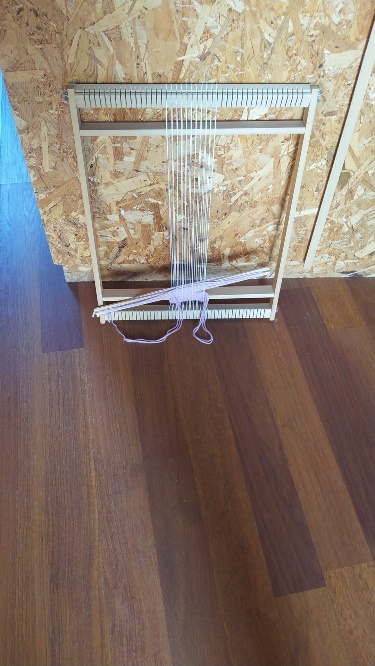
Small tabletop weaving loom
Handcrafted tabletop loom in light wood. Rectangular frame with two vertical uprights and two horizontal crossbars, featuring holes to adjust warp threads.
Read the full record
- Category
- Domestic weaving tools
- Subcategory
- Educational / sample weaving loom
- Materials
- Wood
- Technique
- Manual weaving on loom
- Dimensions
- Height approx. 45 cm; width approx. 35 cm
- Dating
- 20th–21st century
- Location
- Museo Italiano dell’Immaginario Folklorico
- Condition
- Good, with slight signs of use
- Interpretation and context
- Looms of this kind were common in rural Garfagnana homes, where domestic weaving represented both self-sufficiency and a form of feminine creative expression.
- Compiled by
- Alessandro Grossi
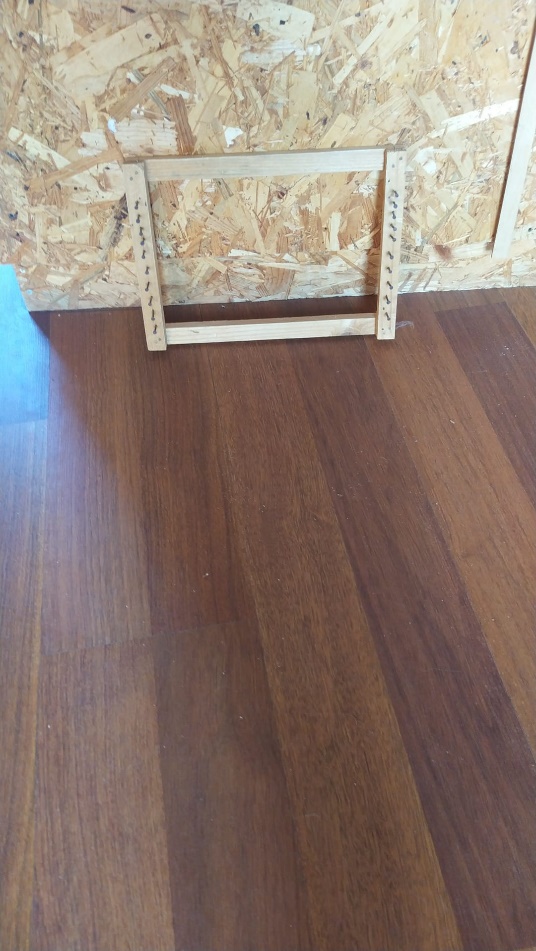
Small tabletop loom
Small handcrafted tabletop loom in light wood. Rectangular frame with vertical uprights and horizontal crossbars, featuring holes to adjust warp threads.
Read the full record
- Category
- Domestic weaving tools
- Subcategory
- Educational / sample weaving loom
- Materials
- Wood
- Technique
- Manual weaving on loom
- Dimensions
- Height approx. 30 cm; width approx. 22 cm
- Dating
- 20th–21st century
- Location
- Museo Italiano dell’Immaginario Folklorico
- Condition
- Good, with slight signs of use
- Interpretation and context
- In Garfagnana, small domestic looms like this were used for practice and sample work, often by young apprentices or for producing decorative fabrics.
- Compiled by
- Alessandro Grossi
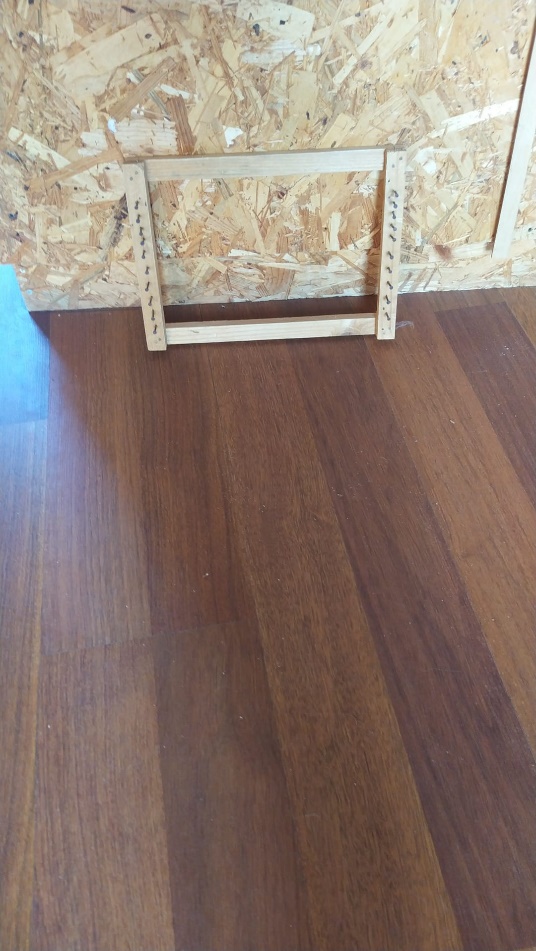
Small tabletop loom
Small handcrafted tabletop loom in light wood. Rectangular frame with vertical uprights and horizontal crossbars, featuring holes to adjust warp threads.
Read the full record
- Category
- Domestic weaving tools
- Subcategory
- Educational / sample weaving loom
- Materials
- Wood
- Technique
- Manual weaving on loom
- Dimensions
- Height approx. 30 cm; width approx. 22 cm
- Dating
- 20th–21st century
- Location
- Museo Italiano dell’Immaginario Folklorico
- Condition
- Good, with slight signs of use
- Interpretation and context
- In Garfagnana, small domestic looms like this were used for practice and sample work, often by young apprentices or for producing decorative fabrics.
- Compiled by
- Alessandro Grossi
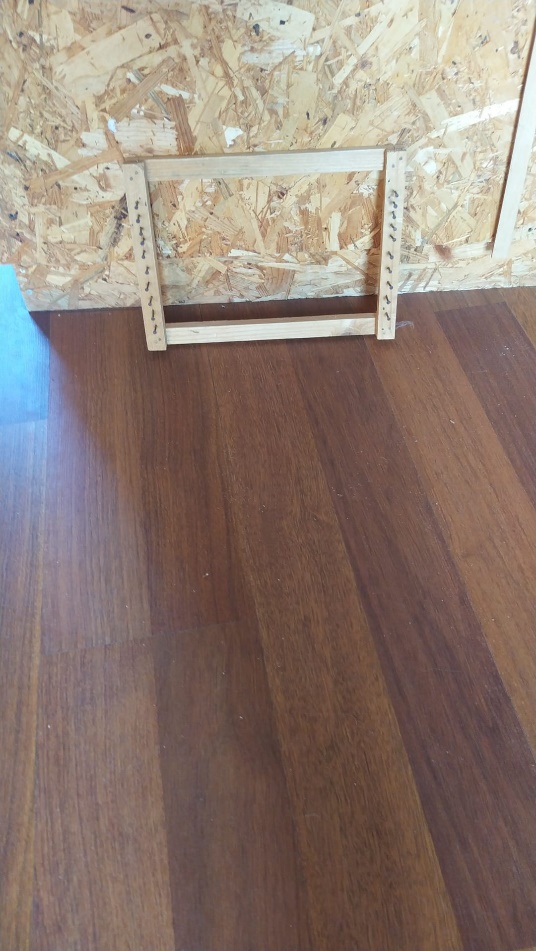
Small tabletop loom
Small handcrafted tabletop loom in light wood. Rectangular frame with vertical uprights and horizontal crossbars, featuring holes to adjust warp threads.
Read the full record
- Category
- Domestic weaving tools
- Subcategory
- Educational / sample weaving loom
- Materials
- Wood
- Technique
- Manual weaving on loom
- Dimensions
- Height approx. 30 cm; width approx. 22 cm
- Dating
- 20th–21st century
- Location
- Museo Italiano dell’Immaginario Folklorico
- Condition
- Good, with slight signs of use
- Interpretation and context
- In Garfagnana, small domestic looms like this were used for practice and sample work, often by young apprentices or for producing decorative fabrics.
- Compiled by
- Alessandro Grossi
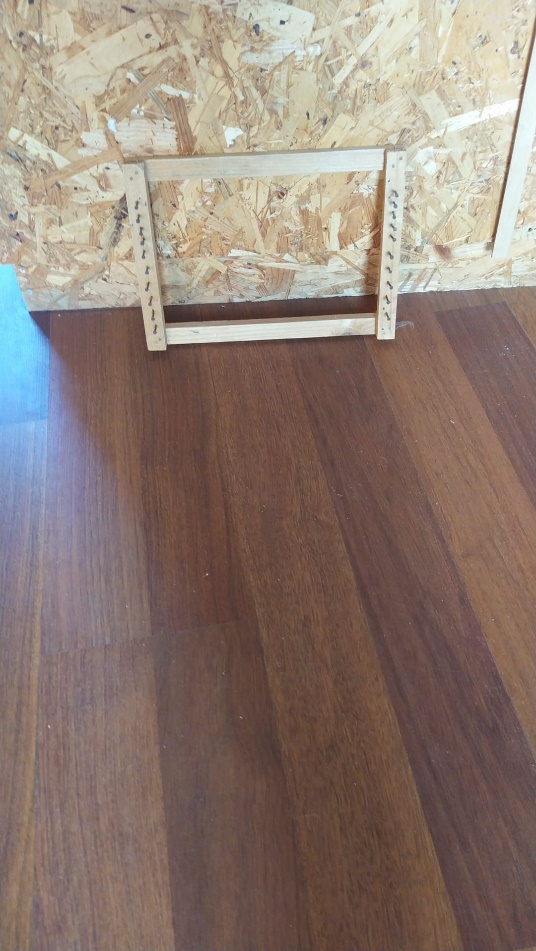
Small tabletop loom
Small handcrafted tabletop loom in light wood. Rectangular frame with vertical uprights and horizontal crossbars, featuring holes to adjust warp threads.
Read the full record
- Category
- Domestic weaving tools
- Subcategory
- Educational / sample weaving loom
- Materials
- Wood
- Technique
- Manual weaving on loom
- Dimensions
- Height approx. 30 cm; width approx. 22 cm
- Dating
- 20th–21st century
- Location
- Museo Italiano dell’Immaginario Folklorico
- Condition
- Good, with slight signs of use
- Interpretation and context
- In Garfagnana, small domestic looms like this were used for practice and sample work, often by young apprentices or for producing decorative fabrics.
- Compiled by
- Alessandro Grossi
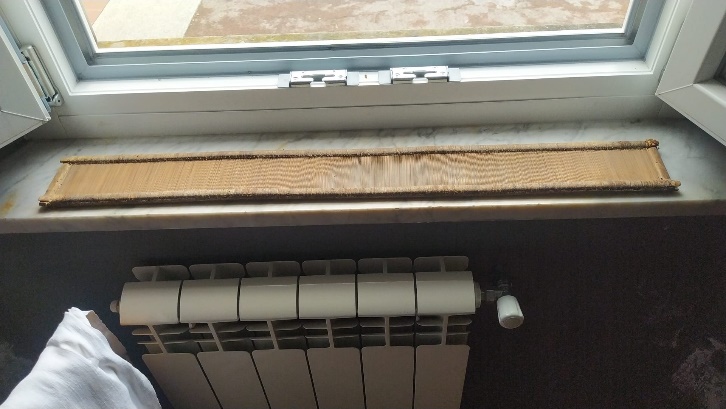
Loom Reed
Rectangular reed with wooden frame and dense parallel metal strips. Used to distribute and compact warp threads during weaving, maintaining fabric regularity.
Read the full record
- Category
- Domestic work tool
- Subcategory
- Weaving implement
- Provenance
- Garfagnana area, Tuscany
- Materials
- Wood and metallic wires (iron or brass)
- Technique
- Manual assembly; insertion of metallic wires between wooden slats
- Dimensions
- Length approx. 32 cm; height approx. 10 cm; thickness approx. 2 cm
- Dating
- 19th–20th century
- Function
- Domestic loom tool for producing linen, hemp, and wool fabrics
- Location
- Museo dell’Immaginario Folklorico
- Condition
- Good; traces of oxidation and wear at the ends
- Interpretation and context
- In the Garfagnana region, loom reeds were common in rural homes until the mid-20th century. Women used them to weave fabrics for family use, passing down traditional techniques and work rhythms.
Domestic weaving represented a form of economic and cultural self-sufficiency. Looms were often handmade, and the reed was the most delicate and precise part of the equipment.
The rhythm of the reed in the loom marked the time of work and domestic life, symbolizing order and continuity. - Bibliography
- Direct observation; oral testimonies from Garfagnana
- Compiled by
- Alessandro Grossi
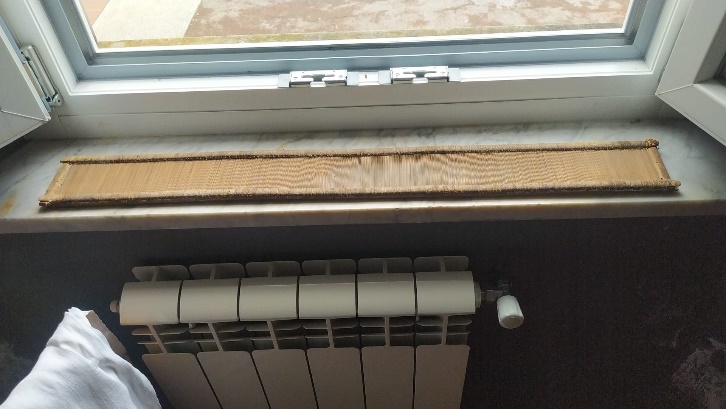
Loom Reed
Rectangular reed with wooden frame and dense parallel metal strips. Used to distribute and compact warp threads during weaving, maintaining fabric regularity.
Read the full record
- Category
- Domestic work tool
- Subcategory
- Weaving implement
- Provenance
- Garfagnana area, Tuscany
- Materials
- Wood and metallic wires (iron or brass)
- Technique
- Manual assembly; insertion of metallic wires between wooden slats
- Dimensions
- Length approx. 32 cm; height approx. 10 cm; thickness approx. 2 cm
- Dating
- 19th–20th century
- Function
- Domestic loom tool for producing linen, hemp, and wool fabrics
- Location
- Museo dell’Immaginario Folklorico
- Condition
- Good; traces of oxidation and wear at the ends
- Interpretation and context
- In the Garfagnana region, loom reeds were common in rural homes until the mid-20th century. Women used them to weave fabrics for family use, passing down traditional techniques and work rhythms.
Domestic weaving represented a form of economic and cultural self-sufficiency. Looms were often handmade, and the reed was the most delicate and precise part of the equipment.
The rhythm of the reed in the loom marked the time of work and domestic life, symbolizing order and continuity. - Bibliography
- Direct observation; oral testimonies from Garfagnana
- Compiled by
- Alessandro Grossi
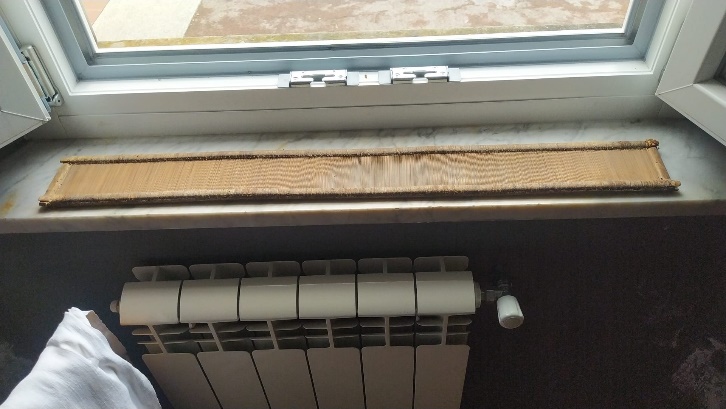
Loom Reed
Rectangular reed with wooden frame and dense parallel metal strips. Used to distribute and compact warp threads during weaving, maintaining fabric regularity.
Read the full record
- Category
- Domestic work tool
- Subcategory
- Weaving implement
- Provenance
- Garfagnana area, Tuscany
- Materials
- Wood and metallic wires (iron or brass)
- Technique
- Manual assembly; insertion of metallic wires between wooden slats
- Dimensions
- Length approx. 32 cm; height approx. 10 cm; thickness approx. 2 cm
- Dating
- 19th–20th century
- Function
- Domestic loom tool for producing linen, hemp, and wool fabrics
- Location
- Museo dell’Immaginario Folklorico
- Condition
- Good; traces of oxidation and wear at the ends
- Interpretation and context
- In the Garfagnana region, loom reeds were common in rural homes until the mid-20th century. Women used them to weave fabrics for family use, passing down traditional techniques and work rhythms.
Domestic weaving represented a form of economic and cultural self-sufficiency. Looms were often handmade, and the reed was the most delicate and precise part of the equipment.
The rhythm of the reed in the loom marked the time of work and domestic life, symbolizing order and continuity. - Bibliography
- Direct observation; oral testimonies from Garfagnana
- Compiled by
- Alessandro Grossi
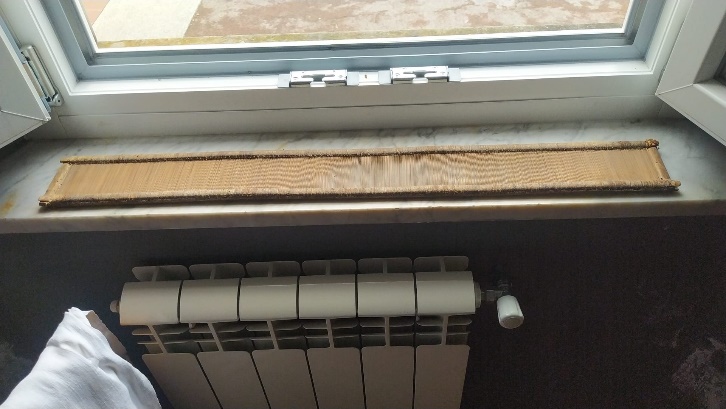
Loom Reed
Rectangular reed with wooden frame and dense parallel metal strips. Used to distribute and compact warp threads during weaving, maintaining fabric regularity.
Read the full record
- Category
- Domestic work tool
- Subcategory
- Weaving implement
- Provenance
- Garfagnana area, Tuscany
- Materials
- Wood and metallic wires (iron or brass)
- Technique
- Manual assembly; insertion of metallic wires between wooden slats
- Dimensions
- Length approx. 32 cm; height approx. 10 cm; thickness approx. 2 cm
- Dating
- 19th–20th century
- Function
- Domestic loom tool for producing linen, hemp, and wool fabrics
- Location
- Museo dell’Immaginario Folklorico
- Condition
- Good; traces of oxidation and wear at the ends
- Interpretation and context
- In the Garfagnana region, loom reeds were common in rural homes until the mid-20th century. Women used them to weave fabrics for family use, passing down traditional techniques and work rhythms.
Domestic weaving represented a form of economic and cultural self-sufficiency. Looms were often handmade, and the reed was the most delicate and precise part of the equipment.
The rhythm of the reed in the loom marked the time of work and domestic life, symbolizing order and continuity. - Bibliography
- Direct observation; oral testimonies from Garfagnana
- Compiled by
- Alessandro Grossi
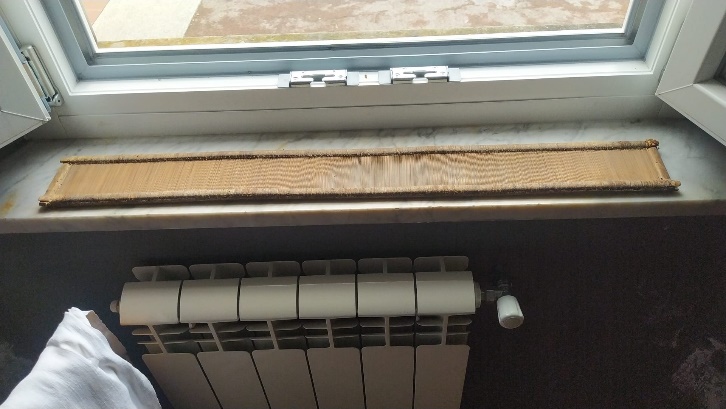
Loom Reed
Rectangular reed with wooden frame and dense parallel metal strips. Used to distribute and compact warp threads during weaving, maintaining fabric regularity.
Read the full record
- Category
- Domestic work tool
- Subcategory
- Weaving implement
- Provenance
- Garfagnana area, Tuscany
- Materials
- Wood and metallic wires (iron or brass)
- Technique
- Manual assembly; insertion of metallic wires between wooden slats
- Dimensions
- Length approx. 32 cm; height approx. 10 cm; thickness approx. 2 cm
- Dating
- 19th–20th century
- Function
- Domestic loom tool for producing linen, hemp, and wool fabrics
- Location
- Museo dell’Immaginario Folklorico
- Condition
- Good; traces of oxidation and wear at the ends
- Interpretation and context
- In the Garfagnana region, loom reeds were common in rural homes until the mid-20th century. Women used them to weave fabrics for family use, passing down traditional techniques and work rhythms.
Domestic weaving represented a form of economic and cultural self-sufficiency. Looms were often handmade, and the reed was the most delicate and precise part of the equipment.
The rhythm of the reed in the loom marked the time of work and domestic life, symbolizing order and continuity. - Bibliography
- Direct observation; oral testimonies from Garfagnana
- Compiled by
- Alessandro Grossi
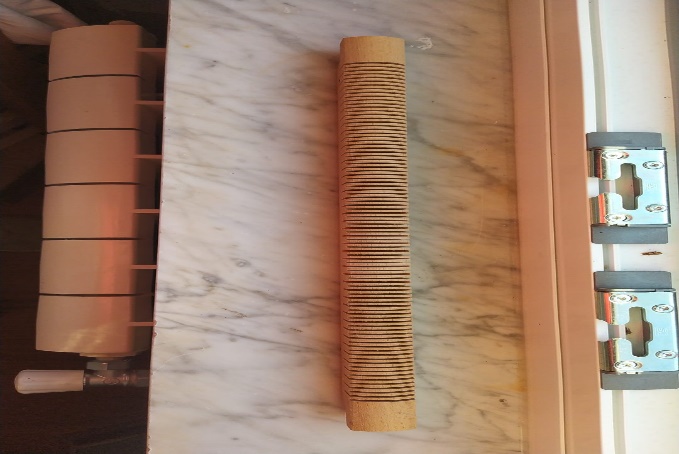
Cylindrical weaving reed
Cylindrical wooden reed with parallel, evenly spaced grooves along the central surface, leaving smooth ends. Used to separate and align warp threads during manual weaving.
Read the full record
- Category
- Domestic weaving tools
- Subcategory
- Cylindrical reed / warp comb
- Materials
- Wood
- Technique
- Manual weaving on loom
- Dimensions
- Length approx. 30 cm; diameter approx. 2.5 cm
- Dating
- 20th–21st century
- Location
- Museo Italiano dell’Immaginario Folklorico
- Condition
- Good, with slight signs of use
- Interpretation and context
- Reeds of this kind were used in Garfagnana households to keep the warp neat and compact, reflecting a textile tradition deeply rooted in domestic women’s work.
- Compiled by
- Alessandro Grossi
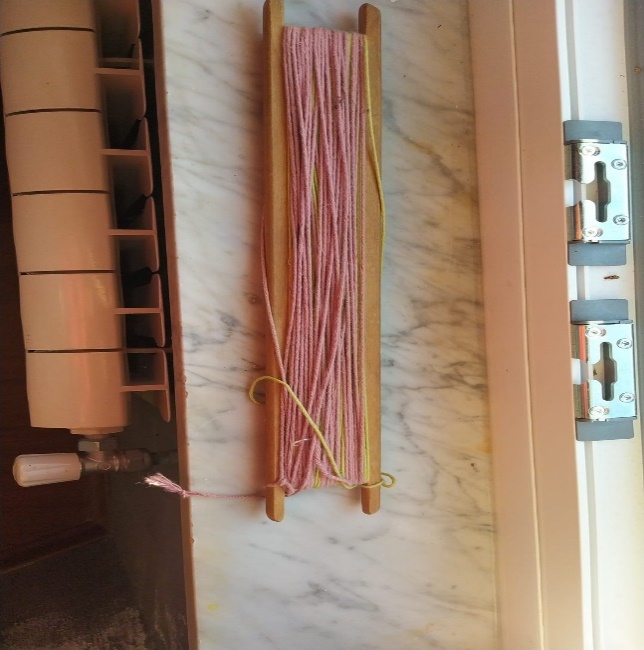
Shuttle with pink yarn
Wooden shuttle with a rectangular shape and rounded ends, wound with pink yarn and traces of yellow and green. Used to hold and guide thread during manual weaving.
Read the full record
- Category
- Domestic weaving tools
- Subcategory
- Weaving shuttle / yarn holder
- Materials
- Wood, wool
- Technique
- Manual weaving on loom
- Dimensions
- Length approx. 22 cm; width approx. 3 cm
- Dating
- 20th–21st century
- Function
- Tool for manual weaving
- Location
- Museo Italiano dell’Immaginario Folklorico
- Condition
- Good, with signs of use
- Compiled by
- Alessandro Grossi