

Scheda oggetti presenti nel museo a vario titolo
Schede catalografiche di base compilate da Alessandro Grossi
Gli oggetti qui schedati sono rappresentazioni fisiche delle figure dell’immaginario o strumenti di attività lavorative della civiltà contadina legati prevalentemente alla tessitura e/o all’intrecciatura. Le statuette prevalentemente in terracotta sono il risultato di attività scolastiche con gli alunni dei Licei Artistici della provincia di Lucca e ripropongono storie e personaggi dell’immaginario folklorico.
The Museum Collections
Objects of material culture and folk imagination preserved by the Museum: search by keyword or browse by section.
166 records found.
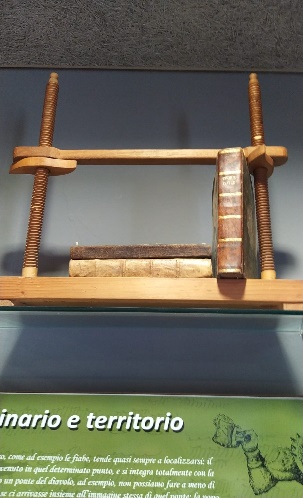
Bookbinder’s Press
Work and Storytelling ObjectsWooden bookbinder’s press consisting of two vertical screws and a movable crossbar used to press volumes. It was employed for binding and compacting books and shows wear marks…
Read the full record
- Category
- Handcraft working tool
- Provenance
- Donated by Michele Neri
- Materials
- Turned and assembled wood
- Technique
- Handcrafted with threaded screws and crossbar
- Dimensions
- approx. 45 × 35 × 20 cm
- Dating
- 19th–20th century
- Location
- Italian Museum of Folk Imagination – Work and Storytelling Objects Section
- Condition
- Good; signs of use and slight oxidation on metal parts
- Interpretation and context
- The bookbinder’s press, donated by Michele Neri, symbolizes the connection between craftsmanship and written culture. A tool of precision and patience, it was used to safeguard printed words and preserve textual memory. Its presence in the museum evokes the binder’s gesture as an act of care toward knowledge.
- Compiled by
- Alessandro Grossi
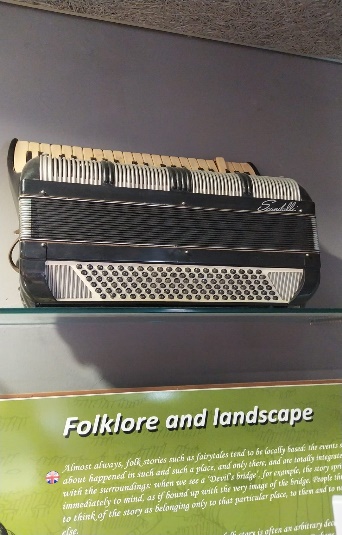
“Scandalli” Accordion
Music and Oral TraditionsAccordion by Scandalli, featuring button keyboard and bellows in black and ivory celluloid. The instrument, of refined craftsmanship, is displayed as a symbol of Garfagnana folk music, often…
Read the full record
- Category
- Musical instrument
- Provenance
- Donated by Nedo Ferri
- Materials
- Metal, celluloid, wood, leather
- Technique
- Handcrafted construction with bellows and keyboard
- Dimensions
- approx. 45 × 40 × 20 cm
- Dating
- 20th century
- Location
- Italian Museum of Folk Imagination – Music and Oral Traditions Section
- Condition
- Good; slight wear and oxidation
- Interpretation and context
- The accordion embodies the musical voice of Garfagnana tradition: it accompanied dances, songs, and folk tales, bringing the community together in celebration. Nedo Ferri’s donation reflects the continuity between personal memory and collective heritage.
- Compiled by
- Alessandro Grossi
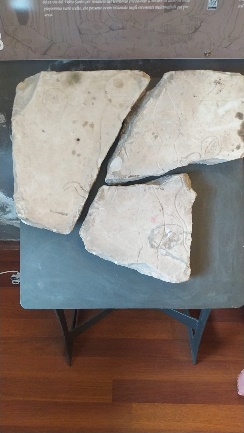
Sarcophagus Fragments
Three limestone fragments with linear and figurative engravings. The surfaces show traces of manual carving and erosion. The fragments likely belonged to a decorated sarcophagus.
Read the full record
- Category
- Archaeological artifact
- Subcategory
- Decorated stone elements
- Provenance
- From the old parish church (pieve) of Piazza al Serchio; part of a sarcophagus
- Materials
- Local limestone
- Technique
- Carving and low-relief engraving
- Dating
- 15th century (approx.)
- Function
- Elements of a funerary sarcophagus intended to hold the remains of a prominent religious or civic figure
- Location
- Museo dell’Immaginario Folklorico
- Condition
- Good; eroded and partially fragmented surfaces
- Interpretation and context
- The parish churches of Garfagnana often preserved decorated sarcophagi, reused or dismantled over the centuries. The presence of stone fragments reflects the continuity of funerary practices and the importance of monumental burials in the late Middle Ages.
The old parish church of Piazza al Serchio, located along medieval transit routes, housed important burials. The fragments, dating to the 15th century, may belong to a sarcophagus dismantled during later restorations or renovations.
The engravings evoke the protection of the soul and the continuity between earthly life and the afterlife. - Bibliography
- Direct observation; local testimonies; parish documentation
- Compiled by
- Alessandro Grossi
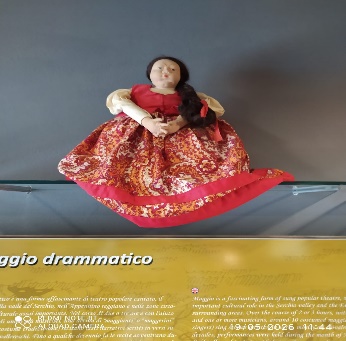
Russian Thermal Doll / Teapot Cover Doll
Folk Figures and NarrativesHandcrafted doll with painted face, long dark braid, and traditional Russian outfit consisting of a light blouse, red bodice, and wide floral skirt. The lower part is padded…
Read the full record
- Category
- Domestic and decorative object
- Provenance
- Donated by Enrichetta
- Materials
- Fabric, padding, papier-mâché, thread, synthetic hair
- Technique
- Hand-sewn and manually shaped with internal padding
- Dimensions
- approx. 30 × 25 × 20 cm
- Dating
- 20th century (second half)
- Location
- Italian Museum of Folk Imagination – Folk Figures and Narratives Section
- Condition
- Good; minor signs of wear
- Interpretation and context
- The doll, donated by Enrichetta, combines function and symbolism: it preserves household warmth and represents the female figure as guardian of the home. In Russian culture, such dolls evoke daily care and the poetry of simple gestures, where warmth becomes memory.
- Compiled by
- Alessandro Grossi
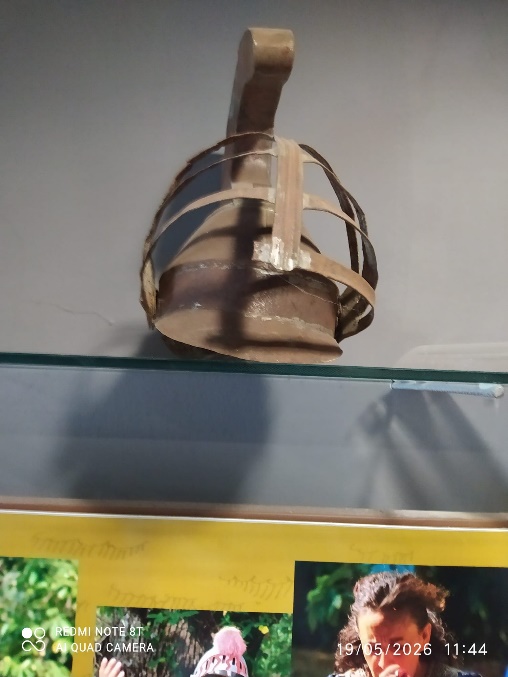
Helmet of the “Maggio drammatico”
Handcrafted helmet with wooden structure and interwoven metal or reed bands, shaped to cover the head and forehead. Shows signs of use and repair. Worn during folk performances…
Read the full record
- Category
- Theatrical headgear
- Provenance
- Garfagnana, Tuscany
- Materials
- Wood, iron, leather, and reed strips
- Technique
- Handcrafted assembly with wooden frame and metal reinforcements
- Dating
- 20th century (first half)
- Function
- Part of the stage costume of the “Maggio drammatico”, used to portray warrior or royal characters
- Location
- Museo Italiano dell’Immaginario Folklorico
- Condition
- Good, with signs of wear and oxidation
- Interpretation and context
- The “Maggio drammatico” is a form of Tuscan folk theatre where peasant actors perform chivalric and religious stories. The helmet embodies the material memory of this oral and communal tradition.
- Compiled by
- Alessandro Grossi
Record – Helmet of the “Maggio drammatico”
Blue and silver helmet with decorative crest, typical of chivalric characters in the Maggio drammatico.
Read the full record
- Category
- Stage helmet
- Provenance
- Garfagnana, Tuscany
Bertei Andrea of Piazza al Serchio - Materials
- Papier-mâché, light metal, paint
- Technique
- Hand-crafted modeling and decoration
- Dimensions
- approx. 30 × 25 × 20 cm
- Dating
- 20th century
- Location
- Museo Italiano dell’Immaginario Folklorico
- Condition
- Good
- Compiled by
- Alessandro Grossi
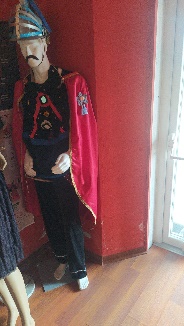
Bodice of the “Maggio drammatico”
Black velvet bodice with golden geometric and floral embroidery, adorned with small mirrors and colored ribbons.
Read the full record
- Category
- Stage garment
- Provenance
- Garfagnana, Tuscany
Bertei Andrea of Piazza al Serchio - Materials
- Black velvet, golden trimming, mirrors, colored ribbons
- Technique
- Hand sewing and decorative craftsmanship
- Dimensions
- approx. 60 × 45 cm
- Dating
- 20th century
- Location
- Museo Italiano dell’Immaginario Folklorico
- Interpretation and context
- In the Garfagnana Maggio drammatico, chivalric characters traditionally wear dark, rich garments—often velvet—to evoke the nobility of the heroes from the 19th-century epic poems that inspire the performances. These costumes, handcrafted within local communities, evolved throughout the 20th century while preserving the solemn and distinctive aesthetic of this open-air woodland theatre.
- Compiled by
- Alessandro Grossi
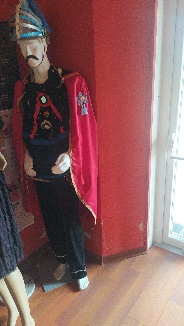
Belt of the “Maggio drammatico”
Dark leather belt with metal studs and a shining buckle, used to support the stage sword.
Read the full record
- Category
- Stage accessory
- Provenance
- Garfagnana, Tuscany
Bertei Andrea of Piazza al Serchio - Materials
- Dark leather, metal studs, silver buckle
- Technique
- Hand-crafted leatherwork
- Dimensions
- approx. 110 × 5 cm
- Dating
- 20th century
- Location
- Museo Italiano dell’Immaginario Folklorico
- Interpretation and context
- In the Garfagnana Maggio drammatico, chivalric characters traditionally wear dark, rich garments—often velvet—to evoke the nobility of the heroes from the 19th-century epic poems that inspire the performances. These costumes, handcrafted within local communities, evolved throughout the 20th century while preserving the solemn and distinctive aesthetic of this open-air woodland theatre.
- Compiled by
- Alessandro Grossi
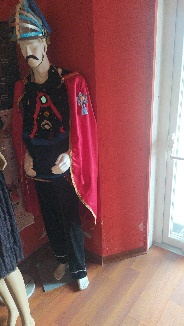
Trousers of the “Maggio drammatico”
Black velvet trousers used by chivalric characters of the Maggio.
Read the full record
- Category
- Stage garment
- Provenance
- Garfagnana, Tuscany
Bertei Andrea of Piazza al Serchio - Materials
- Black velvet
- Technique
- Hand sewing
- Dimensions
- approx. 100 × 40 cm
- Dating
- 20th century
- Location
- Museo Italiano dell’Immaginario Folklorico
- Condition
- Good
- Interpretation and context
- In the Garfagnana Maggio drammatico, chivalric characters traditionally wear dark, rich garments—often velvet—to evoke the nobility of the heroes from the 19th-century epic poems that inspire the performances. These costumes, handcrafted within local communities, evolved throughout the 20th century while preserving the solemn and distinctive aesthetic of this open-air woodland theatre.
- Compiled by
- Alessandro Grossi
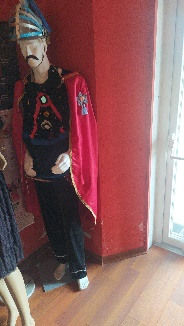
Shield of the “Maggio drammatico”
Painted shield with geometric motifs and vivid colors, used by heroic characters of the Maggio drammatico.
Read the full record
- Category
- Stage shield
- Provenance
- Garfagnana, Tuscany
Bertei Andrea of Piazza al Serchio - Materials
- Wood, papier-mâché, paint
- Technique
- Hand-crafted assembly and decoration
- Dimensions
- approx. 60 × 40 cm
- Dating
- 20th century
- Location
- Museo Italiano dell’Immaginario Folklorico
- Interpretation and context
- In the Garfagnana Maggio drammatico, chivalric characters traditionally wear dark, rich garments—often velvet—to evoke the nobility of the heroes from the 19th-century epic poems that inspire the performances. These costumes, handcrafted within local communities, evolved throughout the 20th century while preserving the solemn and distinctive aesthetic of this open-air woodland theatre.
- Compiled by
- Alessandro Grossi
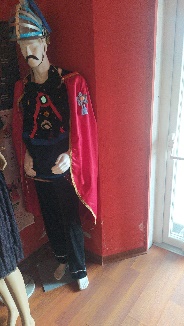
Sword of the “Maggio drammatico”
Lightweight painted stage sword used in chivalric performances of the Maggio drammatico.
Read the full record
- Category
- Stage sword
- Provenance
- Garfagnana, Tuscany
Bertei Andrea of Piazza al Serchio - Materials
- Wood, light metal, paint
- Technique
- Hand-carving and assembly
- Dimensions
- approx. 70 × 10 cm
- Dating
- 20th century
- Location
- Museo Italiano dell’Immaginario Folklorico
- Interpretation and context
- In the Garfagnana Maggio drammatico, chivalric characters traditionally wear dark, rich garments—often velvet—to evoke the nobility of the heroes from the 19th-century epic poems that inspire the performances. These costumes, handcrafted within local communities, evolved throughout the 20th century while preserving the solemn and distinctive aesthetic of this open-air woodland theatre.
- Compiled by
- Alessandro Grossi
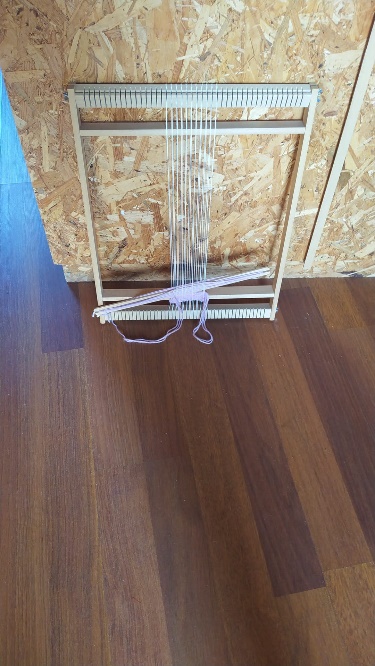
Small tabletop weaving loom
Handcrafted tabletop loom in light wood. Rectangular frame with two vertical uprights and two horizontal crossbars, featuring holes to adjust warp threads.
Read the full record
- Category
- Domestic weaving tools
- Subcategory
- Educational / sample weaving loom
- Materials
- Wood
- Technique
- Manual weaving on loom
- Dimensions
- Height approx. 45 cm; width approx. 35 cm
- Dating
- 20th–21st century
- Location
- Museo Italiano dell’Immaginario Folklorico
- Condition
- Good, with slight signs of use
- Interpretation and context
- Looms of this kind were common in rural Garfagnana homes, where domestic weaving represented both self-sufficiency and a form of feminine creative expression.
- Compiled by
- Alessandro Grossi