

Scheda oggetti presenti nel museo a vario titolo
Schede catalografiche di base compilate da Alessandro Grossi
Gli oggetti qui schedati sono rappresentazioni fisiche delle figure dell’immaginario o strumenti di attività lavorative della civiltà contadina legati prevalentemente alla tessitura e/o all’intrecciatura. Le statuette prevalentemente in terracotta sono il risultato di attività scolastiche con gli alunni dei Licei Artistici della provincia di Lucca e ripropongono storie e personaggi dell’immaginario folklorico.
The Museum Collections
Objects of material culture and folk imagination preserved by the Museum: search by keyword or browse by section.
166 records found.
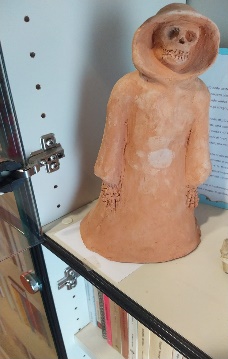
Terracotta Figure Representing the “Strego”
Terracotta figure representing a “strego”, a character from Garfagnana folk tradition. It wears a long hooded cloak and has a skeletal face with carved eyes and mouth. The…
Read the full record
- Category
- Sculpture / Artistic object
- Materials
- Shaped and fired terracotta
- Technique
- Hand modeling and kiln firing
- Dimensions
- approx. 30 × 15 × 12 cm
- Dating
- 21st century
- Location
- Museo Italiano dell’Immaginario Folklorico
- Condition
- Good; slight abrasions and firing marks
- Interpretation and context
- Symbolic representation of the “strego”, a figure connected to folk magic and local beliefs. The piece evokes the relationship between sacred and profane, fear and fascination in Tuscan folklore.
- Compiled by
- Alessandro Grossi
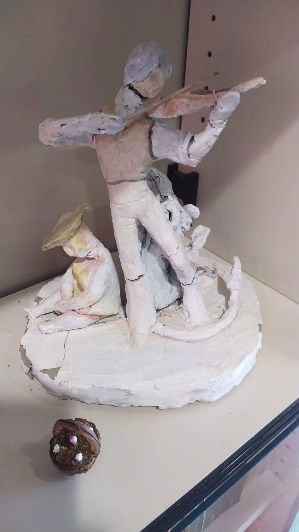
Sculpture “The Witches’ Violinist”
Plaster sculpture depicting a violinist surrounded by seated and crouching figures, interpreted as witches or spirits. The dynamic and irregular composition evokes the movement of sound and the…
Read the full record
- Category
- Sculpture / Artistic object
- Materials
- Plaster and natural pigments
- Technique
- Hand modeling and tempera painting
- Dimensions
- approx. 35 × 30 × 25 cm
- Dating
- 21st century
- Location
- Museo Italiano dell’Immaginario Folklorico
- Condition
- Good; some cracks and minor abrasions
- Interpretation and context
- The piece represents the “Witches’ Violinist”, a symbolic figure of Tuscan folklore linked to sabbaths and magical dances. The violin’s sound becomes a metaphor for evocation and transition between the human and supernatural realms.
- Compiled by
- Alessandro Grossi
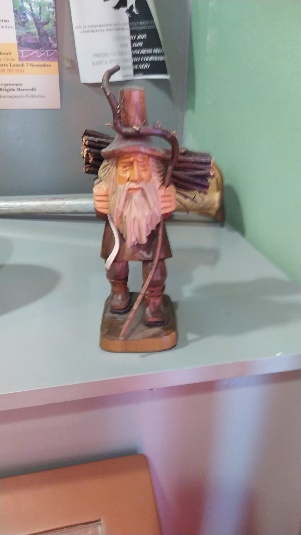
Grandfather of the Forest
Elderly figure with a long white beard, tall hat, firewood bundle on his back and a curved staff; typical iconography of the Tatra mountain tradition.
Read the full record
- Category
- Hand-carved wooden sculpture
- Provenance
- Zakopane, Tatra Mountains region, southern Poland
- Materials
- Carved and painted wood
- Technique
- Hand carving with natural finish
- Dimensions
- approx. 28 × 10 × 8 cm (h × w × d)
- Dating
- 20th–21st century
- Location
- Museo Italiano dell’Immaginario Folklorico
- Condition
- Good
- Interpretation and context
- Dziadek Leśny is rooted in the culture of the Tatra górale, known for woodcarving and a folklore blending Christian motifs with ancient Slavic beliefs about nature spirits. The proximity to Slovakia creates a Carpathian cultural continuity: related figures appear in Slovak folklore as Lesník and Lesovik, guardians of the forests. The figure embodies mountain wisdom, respect for nature, and the memory of rural communities who lived from woodcutting, herding, and small cross-border trade.
Benevolent Slavic forest spirit, guardian of nature, wildlife and rural memory. The bundle of wood symbolizes the life cycle and the bond between humans and the natural world. - Compiled by
- Alessandro Grossi
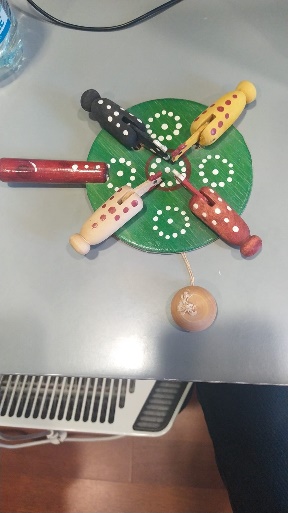
Traditional wooden game, Romania
Folk Games and TraditionsWooden game consisting of a green circular base decorated with concentric white motifs and four stylized colored figures (black, yellow, beige, and red) arranged radially. Each figure is…
Read the full record
- Category
- Traditional handcrafted game
- Materials
- Painted wood and string
- Technique
- Hand turning and painting with natural colors
- Dimensions
- approx. 20 × 20 × 6 cm
- Dating
- 20th–21st century
- Location
- Italian Museum of Folk Imagination – Folk Games and Traditions Section
- Condition
- Excellent; colors and structure well preserved
- Interpretation and context
- Folk game of Romanian origin, likely intended for children or family entertainment. The use of bright colors and symmetry reflects Eastern European craftsmanship, where circular motion and form symbolize the cycle of life and celebration.
- Compiled by
- Alessandro Grossi
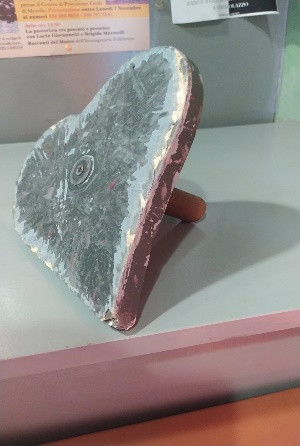
Shield from the Maggio Folk Drama
Heart-shaped shield made of painted wood in gray and red tones. Features a central metal element and a rear wooden support. Used as part of the warrior characters’…
Read the full record
- Category
- Theatrical object
- Subcategory
- Costume accessory
- Provenance
- Garfagnana area, Tuscany
- Materials
- Painted wood and metal
- Technique
- Hand shaping and painting; central metal fastening
- Dimensions
- Height approx. 40 cm; width approx. 35 cm
- Dating
- 20th century
- Function
- Scenic accessory for performances of the Maggio folk drama
- Location
- Museo dell’Immaginario Folklorico
- Condition
- Good; traces of wear and paint abrasion
- Interpretation and context
- In the Garfagnana Maggio folk drama, heart-shaped shields were carried by actors portraying knights or heroes. They symbolized courage and the defense of good, central elements of the popular narrative.
The Maggio shields originate from ancient folk theatrical traditions spread across the Tuscan-Emilian Apennines. The heart shape recalls the symbolism of love and chivalric virtue.
The heart-shaped shield represents the defense of good and the moral strength of the folk hero. - Bibliography
- Direct observation; oral testimonies from Garfagnana
- Compiled by
- Alessandro Grossi
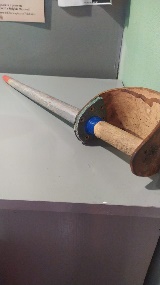
Sword of the Maggio Folk Drama
Maggio Folk DramaStage sword used in the Maggio folk drama of Garfagnana. Made of wood and metal, with a turned handle and semicircular painted guard. The tip is colored red,…
Read the full record
- Category
- Theatrical accessory / Folkloric object
- Provenance
- Community of Piazza al Serchio – Garfagnana
- Materials
- Wood, metal, paint
- Technique
- Handcrafted assembly and manual painting
- Dimensions
- approx. 80 × 15 × 10 cm
- Dating
- 20th century
- Location
- Italian Museum of Folk Imagination – Maggio Folk Drama Section
- Condition
- Good; signs of wear and minor repairs
- Interpretation and context
- The sword of the Maggio folk drama stands as an emblem of courage and heroic fiction. In sung performances, the weapon becomes a symbol of justice and fate, a tool of speech and gesture. The piece preserves the memory of Garfagnana’s popular theatre, where metal and voice merge into a single communal rite.
- Compiled by
- Alessandro Grossi
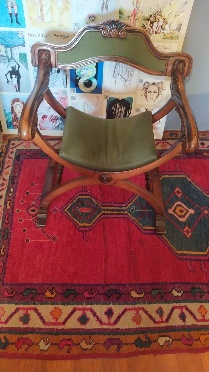
Savonarola Chair
Folding chair with crossed “X” frame, curved armrests, and arched backrest with padded panel. Concave seat covered in matching green fabric. Ornamental carvings with a central relief motif.…
Read the full record
- Category
- Domestic furniture
- Subcategory
- Renaissance folding seat
- Provenance
- Donated by Francesco Diamantini, La Spezia
- Materials
- Solid wood (likely walnut) and green fabric
- Technique
- Carved and turned wood; upholstery and textile covering
- Dating
- 19th–20th century (reproduction of Renaissance model)
- Function
- Ceremonial or study seat, symbol of prestige and authority
- Location
- Museo dell’Immaginario Folklorico
- Condition
- Good; minor wear on wood and fabric
- Interpretation and context
- Model inspired by Renaissance seats used in Italian courts. In the Garfagnana area, between the 19th and 20th centuries, chairs of this type appear in middle-class homes as display furniture: they were placed in formal parlors or domestic studies.
The “X” structure evokes meeting and mutual support, symbolizing a balance between authority and hospitality. - Bibliography
- Direct observation; catalogues of Italian Renaissance furniture
- Compiled by
- Alessandro Grossi
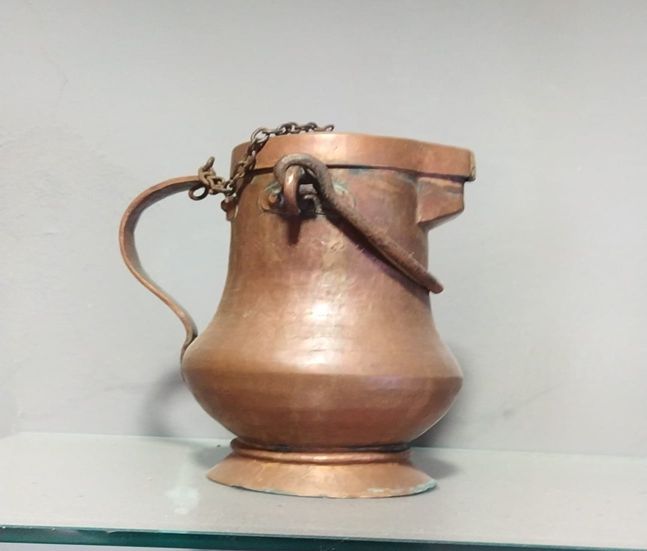
Copper Pitcher
Work and Storytelling ObjectsCopper pitcher with side handle and hinged lid secured by a small iron chain. Its rounded shape and shaped spout suggest domestic use for holding water or wine.…
Read the full record
- Category
- Domestic container / Everyday object
- Provenance
- Donated by Michele Neri
- Materials
- Copper and iron (chain and hinges)
- Technique
- Hammered and hand-soldered craftsmanship
- Dimensions
- approx. 25 × 18 × 15 cm
- Dating
- 19th–20th century
- Location
- Italian Museum of Folk Imagination – Work and Storytelling Objects Section
- Condition
- Good; oxidation and minor dents
- Interpretation and context
- The pitcher, donated by Michele Neri, symbolizes rural life and Garfagnana hospitality. A simple yet precious object, it tells of mountain homes where copper preserved warmth and reflected the hearth’s light.
- Compiled by
- Alessandro Grossi
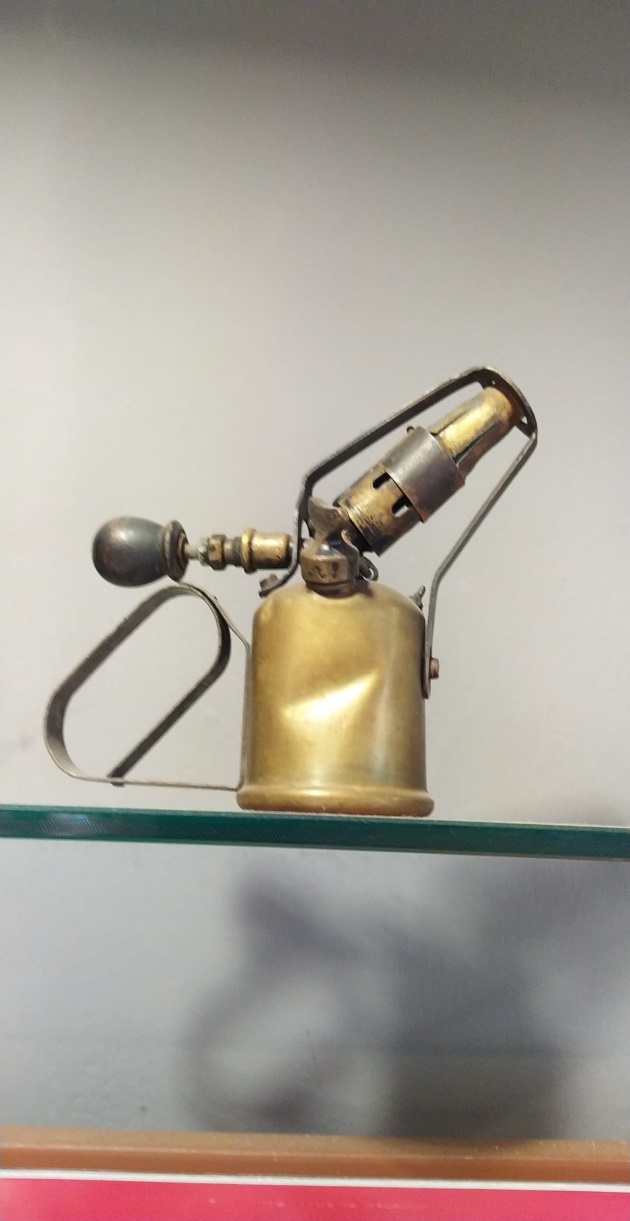
Gasoline Blowtorch
Work and Storytelling ObjectsGasoline blowtorch with brass tank, metal handle, and adjustable nozzle. Used for welding, heating, and melting materials. Features a compact structure and oxidation marks showing long use.
Read the full record
- Category
- Handcraft working tool
- Provenance
- Donated by Michele Neri
- Materials
- Brass, steel, and rubber
- Technique
- Industrial manufacture with welded and turned parts
- Dimensions
- approx. 25 × 20 × 10 cm
- Dating
- 20th century (first half)
- Location
- Italian Museum of Folk Imagination – Work and Storytelling Objects Section
- Condition
- Good; oxidation and wear marks
- Interpretation and context
- The blowtorch, donated by Michele Neri, symbolizes manual labor and 20th-century craftsmanship. A tool of precision and strength, it was used in workshops to shape metal and repair objects. Its flame becomes a symbol of memory that warms and transforms.
- Compiled by
- Alessandro Grossi
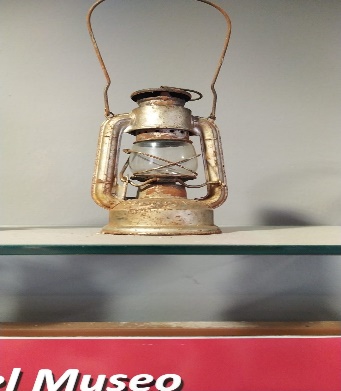
Kerosene Lamp
Work and Storytelling ObjectsSilver-colored metal kerosene lamp with lower fuel tank, protective glass, and upper handle for carrying or hanging. Shows oxidation and wear marks, evidence of long domestic and rural…
Read the full record
- Category
- Lighting object
- Provenance
- Donated by Michele Neri
- Materials
- Metal and glass
- Technique
- Industrial manufacture with stamped and welded components
- Dimensions
- approx. 30 × 15 × 12 cm
- Dating
- 20th century (first half)
- Location
- Italian Museum of Folk Imagination – Work and Storytelling Objects Section
- Condition
- Good; oxidation and age marks
- Interpretation and context
- The lamp, donated by Michele Neri, symbolizes the light of rural evenings and storytelling gatherings. A simple yet essential object, it illuminated tales, work, and family life. Its presence in the museum recalls Garfagnana’s memory before electricity, when the flame was the heart of the home.
- Compiled by
- Alessandro Grossi
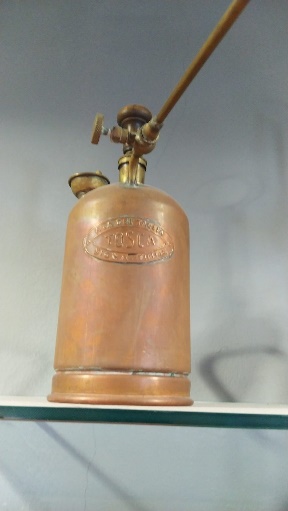
“Tosca – Signa Florence” Spray Pump
Work and Storytelling ObjectsManual copper sprayer with cylindrical tank bearing the dual inscription “Tosca” and “Signa – Florence”. Equipped with a rear handle and long dispensing arm with control valve. The…
Read the full record
- Category
- Agricultural working tool
- Provenance
- Donated by Michele Neri
- Materials
- Copper and brass
- Technique
- Cast and assembled with soldered and turned metal components
- Dimensions
- approx. 45 × 20 × 15 cm
- Dating
- 20th century (first half)
- Location
- Italian Museum of Folk Imagination – Work and Storytelling Objects Section
- Condition
- Good; traces of oxidation and wear
- Interpretation and context
- The spray pump, donated by Michele Neri, is a testament to traditional Tuscan agricultural work. Used for crop care and plant protection, it reflects rural craftsmanship and the evolution of treatment techniques throughout the 20th century.
- Compiled by
- Alessandro Grossi
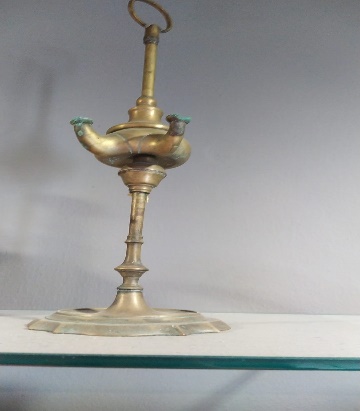
Brass Oil Lamp
Work and Storytelling ObjectsBrass oil lamp with circular base, vertical stem, and central body featuring three wick spouts. The top ring allows it to be carried or hung. The surface shows…
Read the full record
- Category
- Lighting object
- Provenance
- Donated by Michele Neri from his parents Renzo Neri and Maria Amelia Cossu
- Materials
- Brass
- Technique
- Casting and turning with welded components
- Dimensions
- approx. 35 × 15 × 15 cm
- Dating
- 20th–21st century
- Location
- Italian Museum of Folk Imagination – Work and Storytelling Objects Section
- Condition
- Good; oxidation and age marks
- Interpretation and context
- The oil lamp, donated by Michele Neri, recalls traditional forms of domestic lighting. Its three spouts evoke ancient oil lamps, symbols of light, vigil, and storytelling. The object becomes an emblem of memory illuminating Garfagnana evenings before electricity.
- Compiled by
- Alessandro Grossi