

Scheda oggetti presenti nel museo a vario titolo
Schede catalografiche di base compilate da Alessandro Grossi
Gli oggetti qui schedati sono rappresentazioni fisiche delle figure dell’immaginario o strumenti di attività lavorative della civiltà contadina legati prevalentemente alla tessitura e/o all’intrecciatura. Le statuette prevalentemente in terracotta sono il risultato di attività scolastiche con gli alunni dei Licei Artistici della provincia di Lucca e ripropongono storie e personaggi dell’immaginario folklorico.
The Museum Collections
Objects of material culture and folk imagination preserved by the Museum: search by keyword or browse by section.
166 records found.
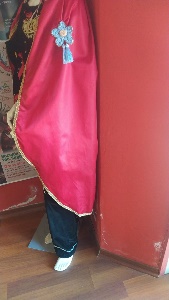
Cloak of the “Maggio drammatico”
Stage cloak made of red fabric with golden edging and a decorative blue cord flower with tassel. Worn by chivalric characters of the Garfagnana Maggio drammatico, it completes…
Read the full record
- Category
- Stage garment
- Provenance
- Garfagnana, Tuscany
Donated by Andrea Bertei of Piazza al Serchio - Materials
- Red fabric with golden trim and decorative blue cord applique
- Technique
- Hand sewing and ornamental applique
- Dimensions
- approx. 120 × 80 cm
- Dating
- 20th century
- Location
- Museo Italiano dell’Immaginario Folklorico
- Condition
- Good
- Interpretation and context
- The Maggio drammatico of Garfagnana is a form of popular epic theatre performed in the woods and villages of the Tuscan-Emilian Apennines. Red cloaks, often adorned with handcrafted motifs, evoke the nobility and valor of the heroes from 19th-century chivalric poems.
- Compiled by
- Alessandro Grossi
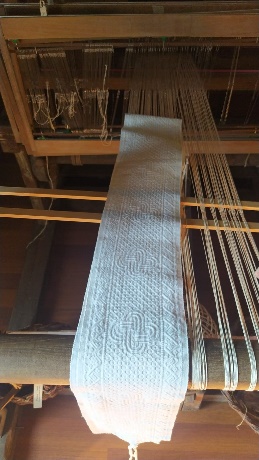
Woven baby band
Handwoven white cotton band featuring a raised geometric pattern of interlaced knots and small diamonds. The compact, even weave reflects skilled craftsmanship. The finished piece was likely intended…
Read the full record
- Category
- Domestic and personal-use textiles
- Subcategory
- Baby band
- Materials
- Cotton
- Technique
- Manual weaving on traditional loom
- Dating
- Early 20th century
- Function
- Baby band or domestic layette item
- Location
- Museo Italiano dell’Immaginario Folklorico
- Condition
- Excellent, with intact and even weave
- Interpretation and context
- In the early 1900s, Garfagnana was a rural and mountainous region marked by subsistence economy, strong community cohesion, and the persistence of domestic craft traditions. Weaving remained a central female skill: households produced layettes, baby bands, and everyday textiles, often decorated with simple yet symbolically meaningful geometric patterns. In a context shaped by poverty and emigration, textile objects carried emotional and identity value, tied to family care and the transmission of tradition.
- Compiled by
- Alessandro Grossi
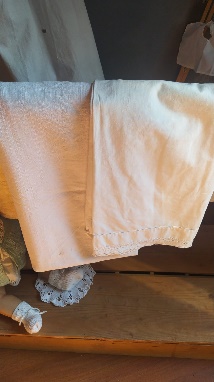
Cotton sheet and pillowcase with embroidered edge
White cotton sheet and pillowcase, finely woven and soft, with hand-embroidered and lace-trimmed edges. The sheet features a decorative hem with lace and small ornamental stitches, while the…
Read the full record
- Category
- Domestic and handcrafted textiles
- Subcategory
- Sheet and pillowcase / bed linen
- Provenance
- Donated by Daniela Fontanini
- Materials
- Cotton
- Technique
- Machine weaving and hand finishing with lace and embroidery
- Dimensions
- Sheet: approx. 220 × 160 cm; pillowcase: approx. 70 × 50 cm
- Dating
- First half of the 20th century
- Location
- Museo Italiano dell’Immaginario Folklorico
- Condition
- Good, with slight wear and natural yellowing
- Interpretation and context
- White cotton bed linen was an essential part of the women’s trousseau. Embroidered and lace-trimmed edges symbolized domestic care and manual skill, passed down through generations in rural Garfagnana families.
- Compiled by
- Alessandro Grossi
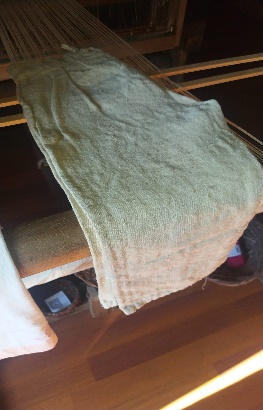
Women’s hemp underpants
Women’s underpants made of raw hemp, natural in color, with a wide and functional cut. They feature a front opening, hand-stitched seams, and a reinforced waistband. The sturdy,…
Read the full record
- Category
- Traditional clothing
- Subcategory
- Underpants / women’s undergarment
- Provenance
- Antonina Bravi – originally belonging to her grandfather, early 1900s
- Materials
- Hemp
- Technique
- Hand weaving and hand sewing
- Dimensions
- Length approx. 70–80 cm; waist width approx. 40–45 cm
- Dating
- Early 20th century
- Location
- Museo Italiano dell’Immaginario Folklorico
- Condition
- Good, with signs of use and natural fabric yellowing
- Interpretation and context
- In Garfagnana and many rural Italian regions, hemp underpants were worn daily by women until the mid-20th century. Hemp, grown and processed at home, ensured strength and durability. This garment reflects the simple, hardworking life of farming communities, where each piece of clothing was the result of family labor and tradition.
- Compiled by
- Alessandro Grossi
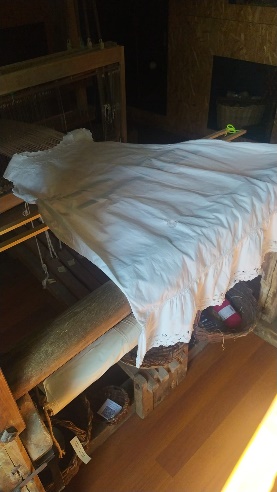
Embroidered cotton women’s slip
Women’s slip in white cotton, wide and lightweight, featuring embroidery and openwork along the lower edge and neckline. Handmade, with fine stitching and ornamental details that enhance its…
Read the full record
- Category
- Traditional clothing
- Subcategory
- Slip / women’s undergarment
- Provenance
- Terni Family of Poggio
- Materials
- Cotton
- Technique
- Hand sewing and embroidery
- Dimensions
- Length approx. 80 cm; width approx. 60 cm
- Dating
- First half of the 20th century
- Location
- Museo Italiano dell’Immaginario Folklorico
- Condition
- Good, with slight fabric wear
- Interpretation and context
- Cotton slips were common in Garfagnana households until the mid-20th century. Made at home or by local seamstresses, they were part of the women’s trousseau and symbolized care, modesty, and family continuity. The donation from the Terni Family of Poggio preserves the memory of an intimate garment tied to daily life and domestic rituals.
- Compiled by
- Alessandro Grossi
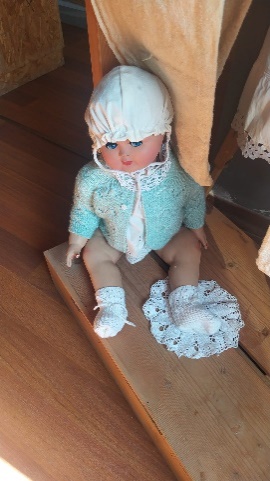
German doll from the 1950s
German doll from the 1950s, with a painted plastic face, movable blue eyes, and molded hair. Dressed in early-20th-century style: white cotton bonnet, light-blue knitted sweater, cotton underwear,…
Read the full record
- Category
- Toys and childhood objects
- Subcategory
- Doll / child figure
- Provenance
- Clothing donated by Daniela Fontanini
Purchased at a flea market for € 40 - Materials
- Plastic, cotton, wool, lace
- Technique
- Industrial manufacture and handcrafted period clothing
- Dimensions
- Height approx. 45 cm
- Dating
- 1950s (doll); clothing inspired by early 20th century
- Location
- Museo Italiano dell’Immaginario Folklorico
- Condition
- Excellent, with minimal signs of age
- Interpretation and context
- Post-war German dolls were widespread across Europe, symbolizing a return to normality and domestic tenderness. The clothing donated by Daniela Fontanini adds emotional and collector’s value.
- Compiled by
- Alessandro Grossi
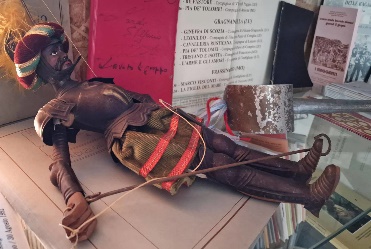
Sicilian Puppet in Armor
Marionette depicting a knight with dark armor, multicolored plumed helmet, and skirt decorated with red ribbons; articulated body and control strings for stage movement.
Read the full record
- Category
- Traditional marionette from the Opera dei Pupi
- Provenance
- Sicily, southern Italy
Donor: Alessio, husband of Enrichetta - Materials
- Wood, metal, fabric, leather
- Technique
- Hand carving and manual assembly with movable metal parts
- Dimensions
- approx. 45 × 15 × 10 cm (h × w × d)
- Dating
- 20th century
- Location
- Museo Italiano dell’Immaginario Folklorico
- Condition
- Good
- Interpretation and context
- The Sicilian puppet is a central figure of the Opera dei Pupi, a popular theater born in the 19th century that recounts the deeds of the paladins of France and chivalric heroes. Each puppet is hand-carved and dressed, with armor reflecting the craftsmanship of Palermo and Catania workshops.
Symbol of courage and justice, the puppet represents the struggle between good and evil and the memory of chivalric virtues passed down orally. - Compiled by
- Alessandro Grossi
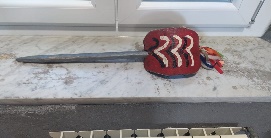
Stage sword of the Garfagnana Maggio folk drama
Maggio Folk DramaStage sword used in performances of the Garfagnana Maggio folk drama. The blade, painted gray, ends with a red handguard decorated with three wavy white and black motifs.…
Read the full record
- Category
- Theatrical accessory / Folkloric object
- Provenance
- Community of Maggio performers of Garfagnana
- Materials
- Painted wood, metal, colored ribbons
- Technique
- Handcrafted, hand-painted
- Dimensions
- approx. 70 × 15 cm
- Dating
- 20th century
- Location
- Italian Museum of Folk Imagination – Maggio Folk Drama Section
- Condition
- Good; minor wear and abrasions
- Interpretation and context
- The stage sword symbolizes valor and justice in the Maggio folk drama. It is not a weapon of attack but a poetic instrument: the act of raising or pointing it accompanies the song and marks the hero’s fate. The colored ribbons evoke factions, ritual joy, and the collective spirit of the performance. Both ritual and theatrical, it unites the memory of epic gesture with the popular vitality of Garfagnana.
- Compiled by
- Alessandro Grossi
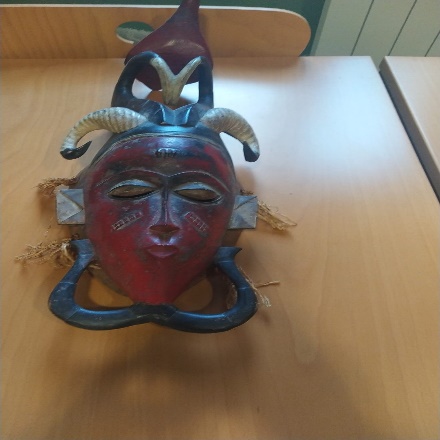
African wooden mask with horns and animal figure
Folk Figures and NarrativesWooden mask painted in red and black, depicting a stylized human face with closed eyes. It features two curved ivory-colored horns and an animal figure carved on the…
Read the full record
- Category
- Ritual and artistic object
- Provenance
- Donated by Alfonso Bertucci
- Materials
- Carved wood, natural pigments, and plant fibers
- Technique
- Hand carving, engraving, and painting with earth and oxide pigments
- Dimensions
- approx. 30 × 18 × 12 cm
- Dating
- 20th century
- Location
- Italian Museum of Folk Imagination – Folk Figures and Narratives Section
- Condition
- Good; pigments and structure well preserved
- Interpretation and context
- African ceremonial mask, likely associated with fertility or protection rituals. The horns and animal figure represent strength and connection with the spiritual world, while the red color symbolizes vitality and power.
- Compiled by
- Alessandro Grossi
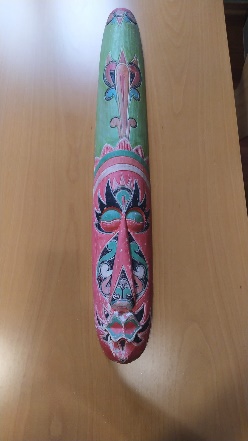
Painted wooden mask
Elongated oval mask with symmetrical lines outlining a stylized face. Predominant colors are red, green, and black, with white and blue details enhancing the shapes. The upper section…
Read the full record
- Category
- Ritual / decorative object
- Materials
- Carved and painted wood
- Technique
- Hand carving and polychrome painting on a smoothed surface
- Dimensions
- Height approx. 45 cm; width 10 cm; depth 6 cm
- Function
- Likely decorative or symbolic use, inspired by tribal or ceremonial masks; possibly protective.
- Location
- Museo Italiano dell’Immaginario Folklorico, Piazza al Serchio (LU)
- Condition
- Good, with minor wear on the painted surface.
- Interpretation and context
- Contrasting colors evoke protection and transformation; the closed eyes suggest an inner dimension.
- Bibliography
- Direct observation and stylistic comparison with handcrafted wooden masks.
- Compiled by
- Alessandro Grossi