

Scheda oggetti presenti nel museo a vario titolo
Schede catalografiche di base compilate da Alessandro Grossi
Gli oggetti qui schedati sono rappresentazioni fisiche delle figure dell’immaginario o strumenti di attività lavorative della civiltà contadina legati prevalentemente alla tessitura e/o all’intrecciatura. Le statuette prevalentemente in terracotta sono il risultato di attività scolastiche con gli alunni dei Licei Artistici della provincia di Lucca e ripropongono storie e personaggi dell’immaginario folklorico.
The Museum Collections
Objects of material culture and folk imagination preserved by the Museum: search by keyword or browse by section.
166 records found.
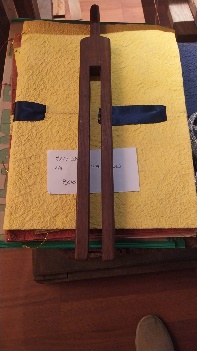
Loom Bobbin or Fork Tool
Elongated wooden tool with two parallel arms and an upper handle. Used in the loom to hold or guide thread during weaving, or as a bobbin for winding…
Read the full record
- Category
- Traditional textile tool
- Provenance
- Garfagnana area, Province of Lucca
- Materials
- Wood
- Technique
- Hand-turned and carved
- Dimensions
- approx. 30 cm (length); 4 cm (width)
- Dating
- 20th century
- Function
- In Garfagnana, similar tools were used in home looms for weaving linen, hemp, and wool. Bobbins were often made from local wood (chestnut or beech) and passed down through generations as part of the family’s household equipment.
- Location
- Italian Museum of Folk Imagination
- Interpretation and context
- The bobbin symbolizes the rhythm of work and creation, the continuous motion that turns thread into fabric. It stands for patience and harmony, essential qualities of rural and craft life.
Weaving in Garfagnana was widespread until the mid-20th century. Bobbins and loom forks were essential for maintaining thread tension and ensuring fabric consistency. These now-rare tools reflect the manual skill and precision of women’s and artisans’ work in the valley. - Compiled by
- Alessandro Grossi
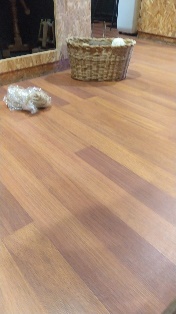
Basket with rear hooks
Description
Read the full record
- Category
- Category
- Subcategory
- Sub-category
- Provenance
- Provenance
- Materials
- Material
- Technique
- Technique
- Dimensions
- Dimensions
- Dating
- Dating
- Function
- Original function
- Location
- Current location
- Condition
- State of conservation
- Interpretation and context
- Cultural context
Symbolic / ethno-anthropological note - Compiled by
- Alessandro Grossi
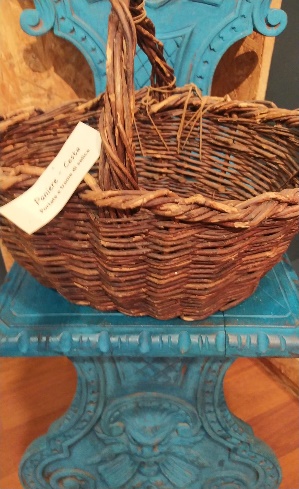
Wicker Basket with Handle
Handwoven basket with a sturdy structure and arched handle, featuring a twisted rim and regular weave that ensure strength and practicality.
Read the full record
- Category
- Domestic and agricultural basket with handle
- Provenance
- Garfagnana area, Province of Lucca. Oval basket with dense and regular weave, handmade from local wicker. Traditionally used in agricultural and domestic activities for gathering fruit, leaves, and small woodland products. Donated by Elena Giusti to the Gastone Venturelli Library for the 1970 exhibition “Weaving in the Lucchese Area”; later transferred and donated to the Italian Museum of Folkloric Imagination.
- Materials
- Woven wicker
- Technique
- Regular handwoven technique with twisted rim and arched handle
- Dating
- 20th century (first half)
- Function
- Used for collecting and carrying agricultural products, fruit, or leaves
- Location
- Museo Italiano dell’Immaginario Folklorico
- Condition
- Good, with slight signs of use
- Interpretation and context
- Typical object of rural tradition, symbolizing domestic economy and local craftsmanship.
- Compiled by
- Alessandro Grossi
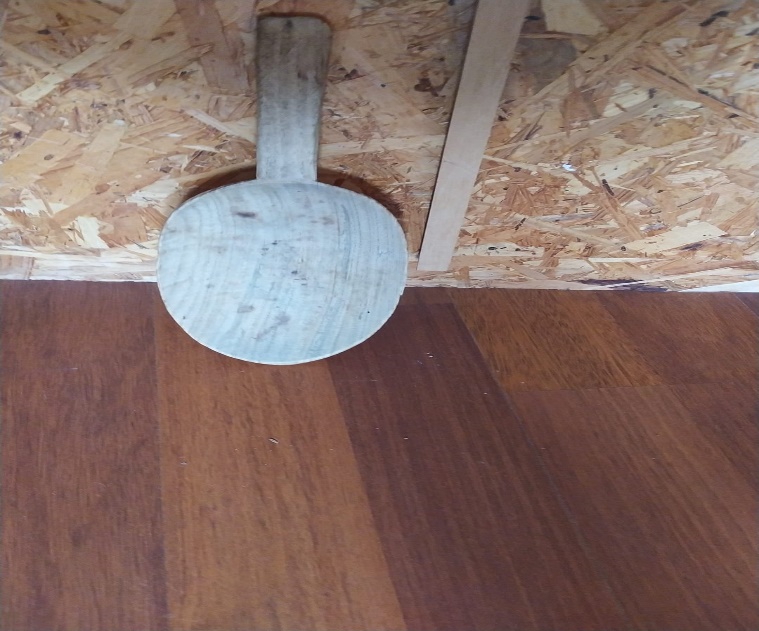
Wooden Baking or Dough Paddle
Wooden paddle with elongated handle and oval end, used for moving or collecting dough, bread, or other baked goods. The surface shows wear and discoloration from prolonged use.
Read the full record
- Category
- Work tool / Domestic utensil
- Materials
- Beech or chestnut wood
- Technique
- Hand carving and smoothing
- Dimensions
- approx. 50 × 20 × 3 cm
- Dating
- 19th–20th century
- Location
- Museo Italiano dell’Immaginario Folklorico
- Condition
- Good; signs of use and slight abrasion
- Interpretation and context
- Typical domestic utensil of rural tradition, symbol of craftsmanship and daily life connected to bread making.
- Compiled by
- Alessandro Grossi
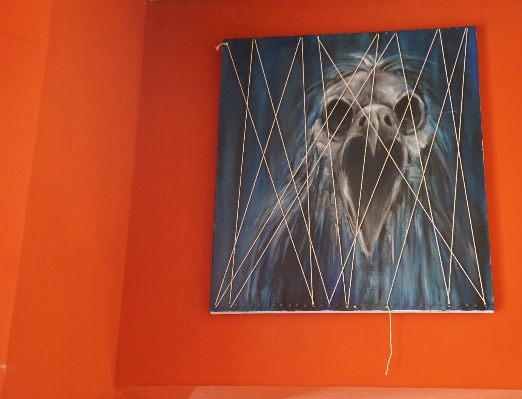
Trapped Bird – The Pire in Garfagnana
The artwork portrays a bird caught in a moment of tension and confinement: its body is contracted, wings closed, gaze turned toward a distant light. A web of…
Read the full record
- Provenance
- Barbara Visciano
Local contemporary collection - Materials
- Paper, colored pigments
- Technique
- Colored pencils on paper
- Dimensions
- 70 × 50 cm
- Dating
- 21st century
- Location
- Italian Museum of Folk Imagination
- Interpretation and context
- The Pire belongs to Garfagnana folklore as a nocturnal presence tied to childhood fears and inner turmoil. In this interpretation, the bird becomes a metaphor for the soul attempting to free itself from deep unrest. The work is part of a cycle dedicated to local imaginary beings and perceptions.
- Compiled by
- Alessandro Grossi
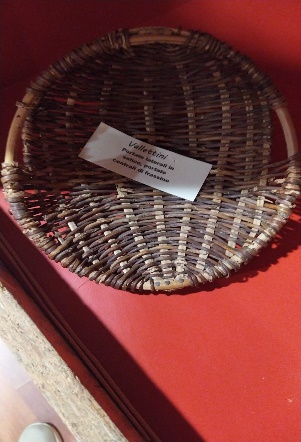
Small Valletto
Smaller basket than the “Valletto”, featuring a dense and regular weave. The mix of willow and ash ensures flexibility and durability.
Read the full record
- Category
- Domestic and agricultural basket
- Provenance
- Garfagnana area, Province of Lucca
- Materials
- Willow (lateral parts), ash wood (central parts)
- Technique
- Handwoven circular structure with reinforced rim
- Dating
- 20th century (first half)
- Function
- Used for collecting and carrying small agricultural or household items
- Location
- Museo Italiano dell’Immaginario Folklorico
- Condition
- Good, with minor signs of use
- Interpretation and context
- Object of rural craftsmanship, symbol of domestic economy and sustainable use of natural resources.
- Compiled by
- Alessandro Grossi
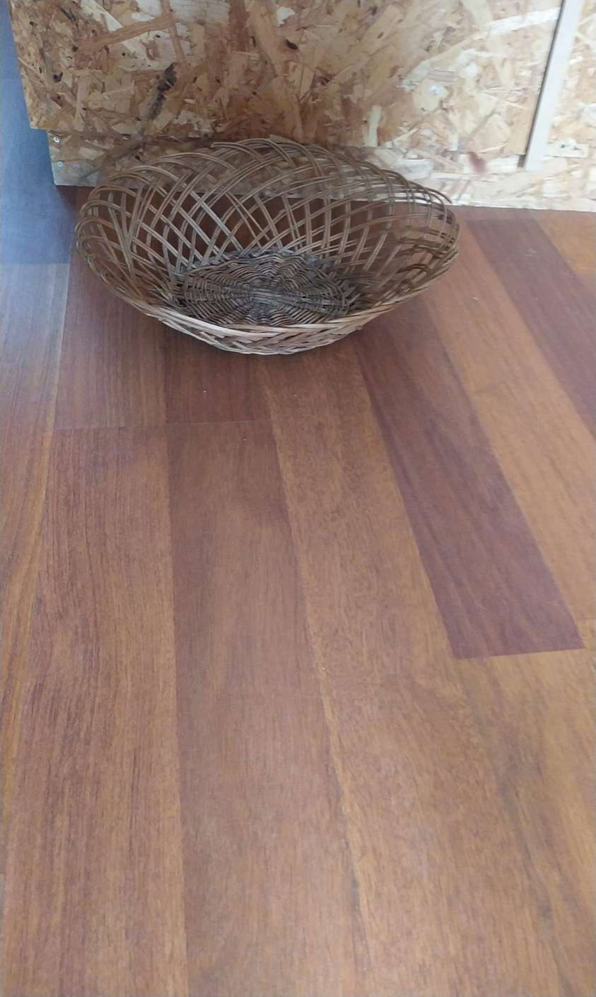
Basket
Handwoven basket with a light structure and regular pattern, ensuring durability and ease of use.
Read the full record
- Category
- Domestic and agricultural basket
- Provenance
- Garfagnana area, Province of Lucca. Oval basket with an open and light weave, handmade from thin strips of local wood. Traditionally used in the region’s agricultural activities for gathering leaves, chestnuts, and small woodland products. Donated by Elena Giusti to the Gastone Venturelli Library for the 1970 exhibition “Weaving in the Lucchese Area”; later transferred and donated to the Italian Museum of Folkloric Imagination.
- Materials
- Woven wooden strips
- Technique
- Open handwoven technique with crossed pattern
- Dating
- 20th century (first half)
- Function
- Used for collecting and carrying agricultural products, fruit, or leaves
- Location
- Museo Italiano dell’Immaginario Folklorico
- Condition
- Excellent, with minimal signs of use
- Interpretation and context
- Typical object of rural tradition, symbolizing domestic economy and local craftsmanship.
- Compiled by
- Alessandro Grossi
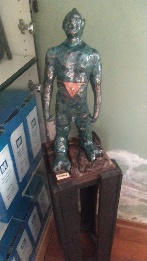
Extraterrestrial sculpture
Presences and VisionsSculpture depicting an extraterrestrial creature with an elongated body and hybrid forms, featuring an oval head and deep eyes. The work plays on the boundary between myth and…
Read the full record
- Category
- Contemporary sculpture
- Provenance
- Fabrizio Giorgi
- Materials
- Clay and natural pigments, acrylic finish
- Technique
- Hand modeling and cold painting
- Dimensions
- Height approx. 45 cm; width approx. 25 cm; depth approx. 20 cm
- Dating
- 21st century
- Location
- Italian Museum of Folk Imagination – Presences and Visions Section
- Condition
- Excellent; slight surface marks due to hand modeling
- Interpretation and context
- The work belongs to Fabrizio Giorgi’s cycle of fantastic sculptures, dedicated to imaginary presences and contemporary myths. The artist, connected to Garfagnana, transforms folk tradition into a visionary language, where the extraterrestrial becomes a symbol of otherness and universal curiosity.
Giorgi’s extraterrestrial represents the continuity of Garfagnana myth in the modern world: a figure that, like the ancient forest spirits, questions humankind about the mystery of existence and the longing for knowledge. - Compiled by
- Alessandro Grossi
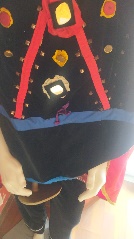
Maggio performers’ bodice from Garfagnana
Black velvet bodice decorated with geometric fabric appliqués in red, yellow, blue, and white, enriched with small mirrors and golden trimmings. It is part of the Maggio performers’…
Read the full record
- Category
- Theatrical clothing
- Subcategory
- Folk drama costume
- Provenance
- Local Garfagnana craftsmanship
- Materials
- Black velvet, colored fabrics, mirrors and trimmings
- Technique
- Hand sewing, decorative appliqué and embroidery
- Dimensions
- Height approx. 60 cm; width approx. 50 cm
- Dating
- 20th century
- Function
- Part of the stage costume of Maggio folk drama characters
- Location
- Museo Italiano dell’Immaginario Folklorico
- Condition
- Good; slight wear on fabric and decorations
- Interpretation and context
- The Maggio folk drama of Garfagnana is a sung popular theatre form where actors wear richly decorated costumes. The bodice represents the heroic and festive aspect of the character, with elements recalling chivalric tradition and agrarian rituality.
The bodice, with its colors and mirrors, symbolizes light overcoming darkness, a central theme of the Garfagnana Maggio. - Compiled by
- Alessandro Grossi
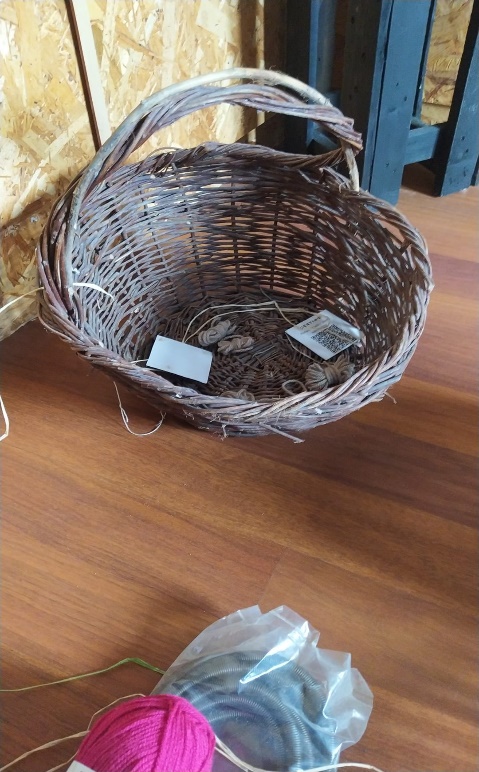
Basket with handle
Handwoven basket with a sturdy structure and arched handle, featuring a dense and regular weave that ensures strength and practicality.
Read the full record
- Category
- Domestic and agricultural basket with handle
- Provenance
- Garfagnana area, Province of Lucca. Circular basket with an arched wicker handle, handwoven with local materials. Traditionally used in agricultural activities for gathering fruit, leaves, and small woodland products. Donated by Elena Giusti to the Gastone Venturelli Library for the 1970 exhibition “Weaving in the Lucchese Area”; later transferred and donated to the Italian Museum of Folkloric Imagination.
- Materials
- Woven wicker
- Technique
- Regular handwoven technique with reinforced rim and arched handle
- Dating
- 20th century (first half)
- Function
- Used for collecting and carrying agricultural products, fruit, or leaves
- Location
- Museo Italiano dell’Immaginario Folklorico
- Condition
- Good, with slight signs of use
- Interpretation and context
- Typical object of rural tradition, symbolizing domestic economy and local craftsmanship.
- Compiled by
- Alessandro Grossi
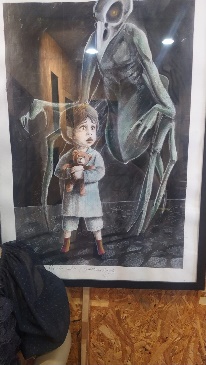
Child and dark figure – Pire in Garfagnana
The artwork depicts a child in pajamas clutching a teddy bear, illuminated by a warm light from an open doorway. Behind him rises a spectral figure, tall and…
Read the full record
- Provenance
- Gualtiero Cagna
- Technique
- Colored pencils on paper
- Dimensions
- 70 × 50 cm
- Dating
- 2015
- Location
- Museo Italiano dell’Immaginario Folklorico, Garfagnana
- Interpretation and context
- The image belongs to the cycle of nocturnal presences of Garfagnana, where the “Pire” embodies childhood fear turned into a symbolic figure. The work blends illustrative language and theatrical suggestion, using expressive lighting to mark the boundary between reality and imagination.
- Compiled by
- Alessandro Grossi
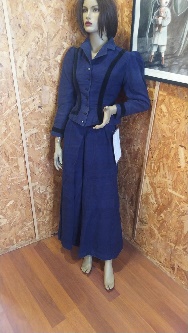
Handwoven women’s dress from Garfagnana
Domestic and Textile LifeColore: Blue with black velvet appliqués Outfit consisting of a short jacket and central-panel skirt. The jacket features leg-of-mutton sleeves, wide at the top and narrower at the…
Read the full record
- Provenance
- Garfagnana (Tuscany)
Donor / Collection: ... (insert if known) - Materials
- Wool–cotton blend; black velvet appliqués
- Technique
- Domestic handloom weaving; hand-stitched construction
- Dimensions
- approx. ... (insert if available)
- Dating
- Mid-19th century
- Function
- Women’s everyday or occasional dress in the rural Garfagnana context
- Location
- Italian Museum of Folk Imagination – Domestic and Textile Life Section
- Interpretation and context
- In 19th-century Garfagnana, domestic weaving was essential: women spun and wove at home, producing durable yet lightweight fabrics through mixed fibers. The leg-of-mutton sleeves and velvet appliqués echo urban fashions reinterpreted in a rural context, while the skirt’s central panel and back box pleat met the needs for mobility and durability typical of mountain communities.
- Compiled by
- Alessandro Grossi